Use the light without occupying the opening
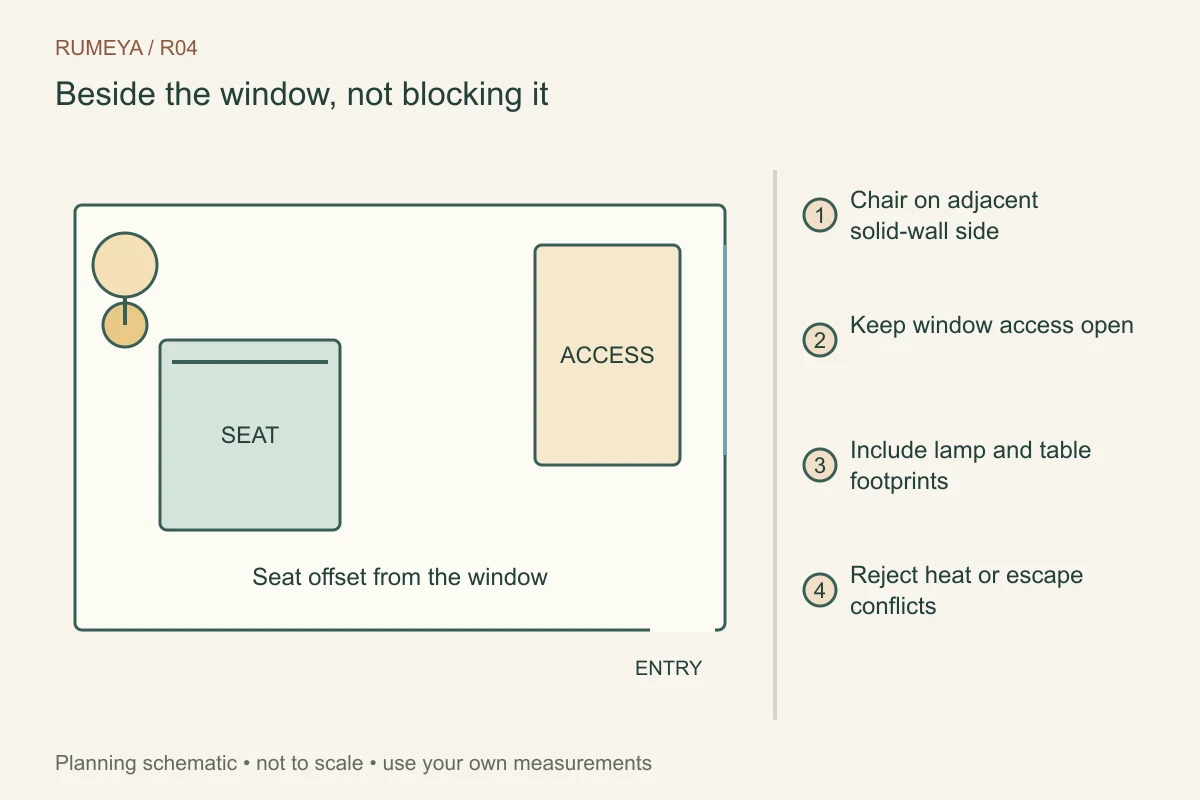
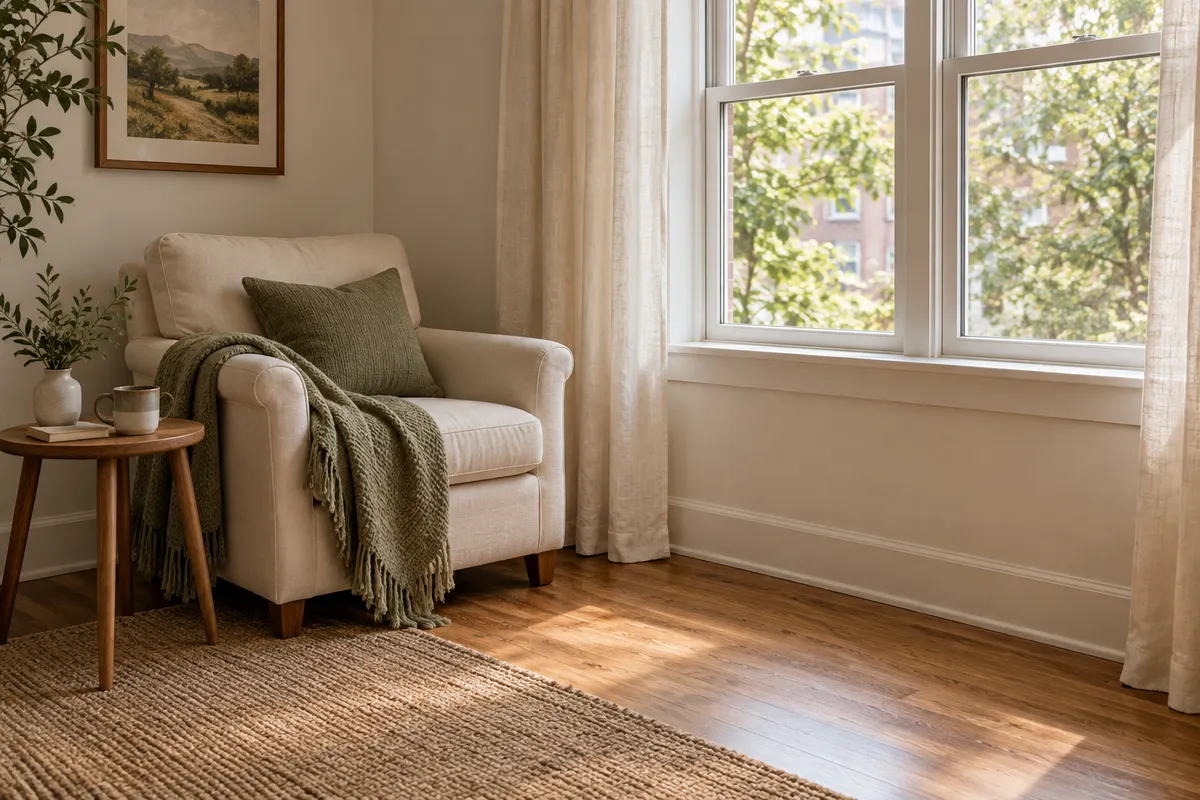
A chair beside a window can offer a pleasant place to read without the cost or commitment of a built-in bench. Begin by placing the chair on the adjacent solid-wall side, leaving the window itself accessible. This often gives you daylight without making the seat part of the window opening.
The concept here is for an adult reading area. It is not a child-safe window-seat design. If children live in or visit the home, follow window-safety guidance and keep climbable furniture away from windows and covering cords.
Check the window’s working area
Open the window and operate its covering before marking the chair. Include inward-opening sections, handles, curtains, and the place where you stand to use them. Keep any required emergency escape access unobstructed; have local requirements checked if the function of the window is unclear.
CPSC’s window guidance warns that insect screens do not prevent falls. Do not rely on a screen to justify placing furniture where children can climb. A pretty view is secondary to a window arrangement that suits the people using the home.
Measure the chair as a complete object
Use outside width and depth, including the arms and any reclining or swivel movement. Mark where your feet rest and how you stand. A compact seat can still need a larger working area than the space directly under its legs.
For a hypothetical 48-inch-wide corner zone, a 30-inch-wide chair leaves 18 inches in total beside it. Adding a 16-inch table uses nearly all of that spare width before gaps are considered. Try the table on the room-facing side or omit it if another reachable surface already exists.
Check heat, glare, and evening use
Look for radiators, baseboard heaters, and floor vents before settling on the corner. Follow the actual heating equipment’s clearance requirements. Do not put a chair over a vent or let a curtain fall onto a heater because the floor outline otherwise fits.
Read there at the time you expect to use the space. Bright light directly on a glossy page or screen may be uncomfortable. After dark, use a suitable lamp with a cable route outside the walkway. The window should not be the nook’s only source of useful light.
Skip the extra furniture if the corner is too tight
A freestanding bench introduces its own seat rating, stability, and access questions. Do not substitute a storage chest that is not intended for sitting. If neither chair nor approved bench leaves the window usable, choose a different wall.
Our reading nook guide includes locations beyond the window. The goal is a usable place to read, not a compulsory seat directly below the glass. A chair offset from the opening can preserve both the view and the window’s everyday function.
Compare the options
| Check | Include | Reject the location if |
|---|---|---|
| Window use | Handles, covering, and opening | Furniture blocks operation or required escape |
| Chair use | Feet, standing, and moving parts | The route disappears when occupied |
| Household safety | Children and climbable furniture | The concept conflicts with window guidance |
Before you make a change
- Keep the window’s working area accessible.
- Use full chair dimensions and movement.
- Check actual heating equipment requirements.
- Choose another wall when the window location fails.
Sources and planning notes
Room examples and calculations are original planning exercises, not measurements from a home we visited or product tests. Dimensions described as hypothetical should be replaced with your own measurements. The diagram explains the decision; the AI-generated image shows a possible visual example.
See our editorial approach for how we use sources and concept images.