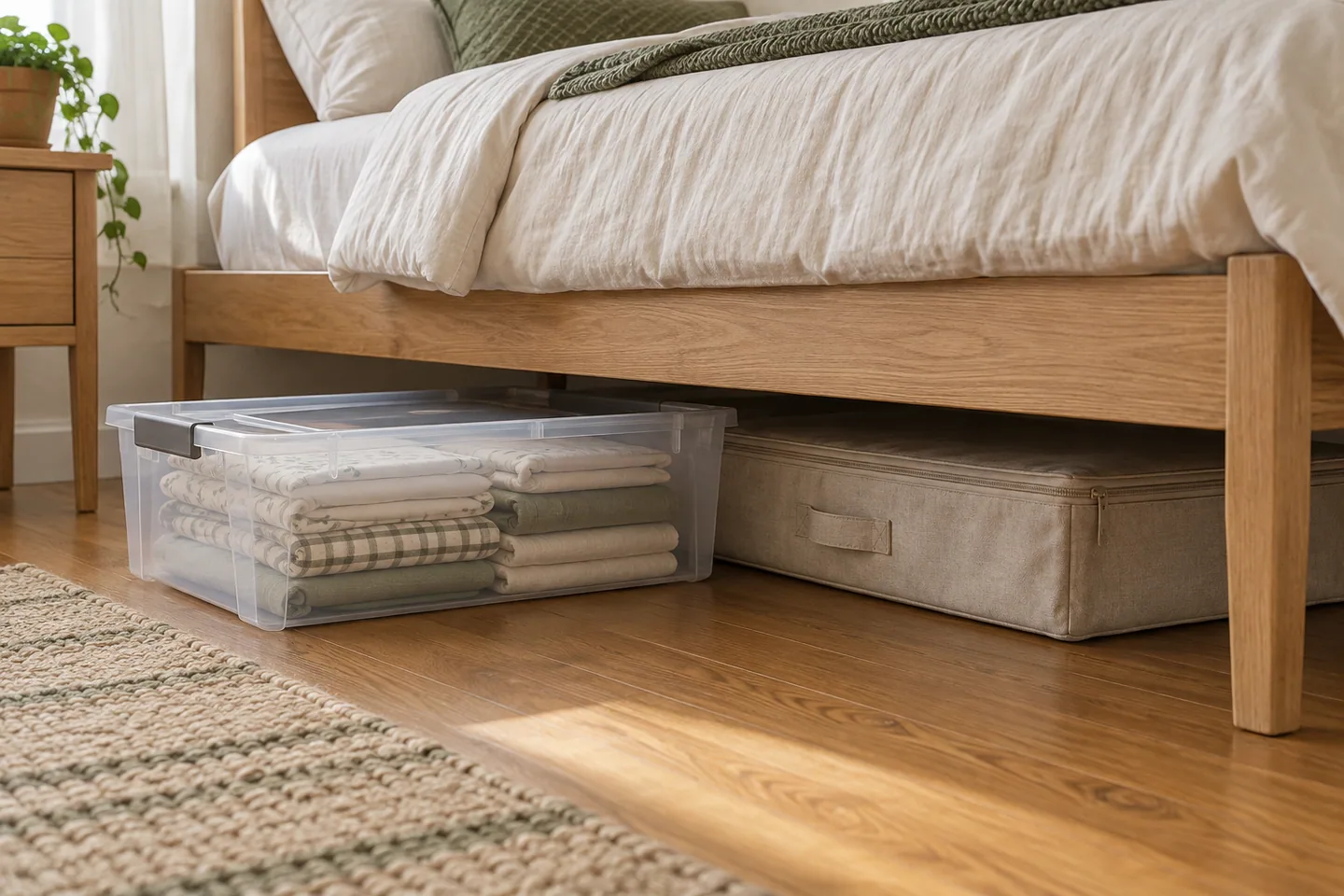
An under-bed bin is only useful if you can get it out. A container may fit below the rails and still get stuck behind a nightstand, catch on a rug, or require you to move half the room to reach it.
Treat under-bed storage as a small access problem before treating it as an organizing project. Once you know what fits and how it comes out, choosing containers becomes much easier.
Measure height, usable space, and the route out
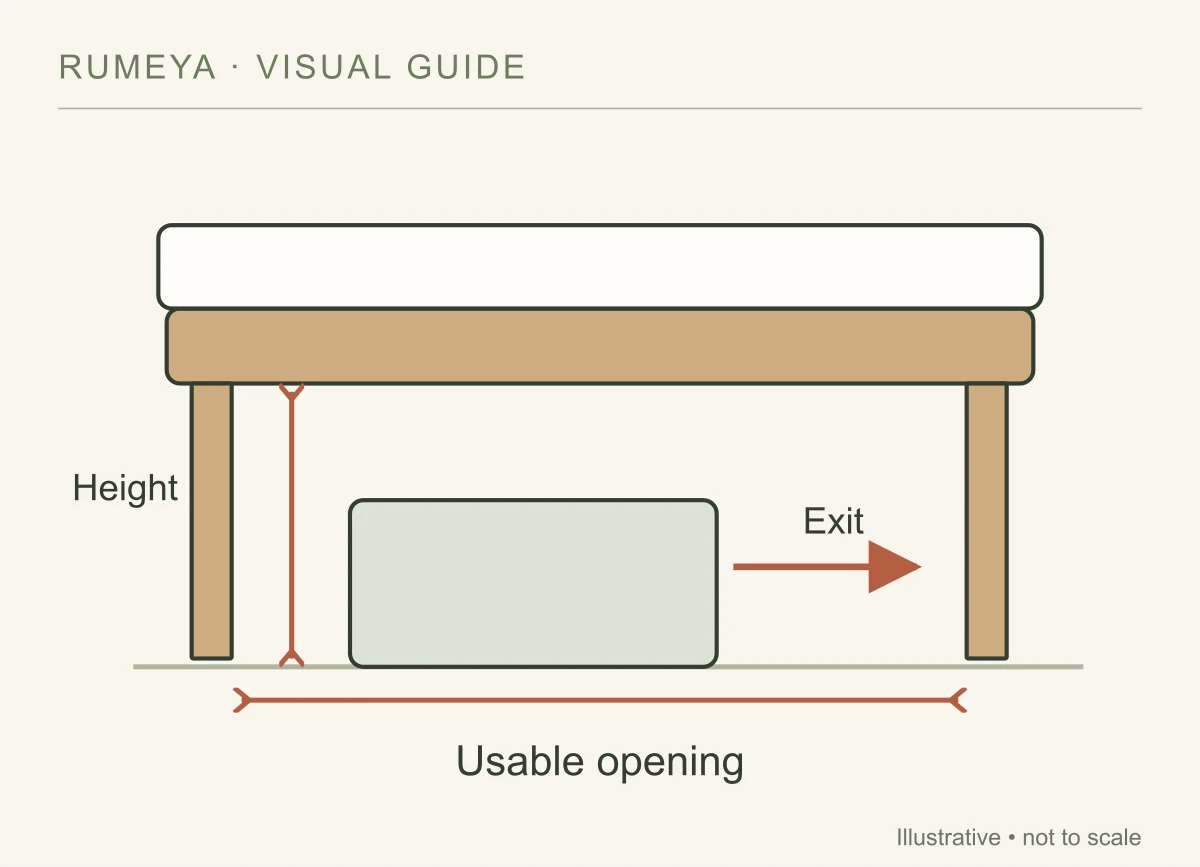
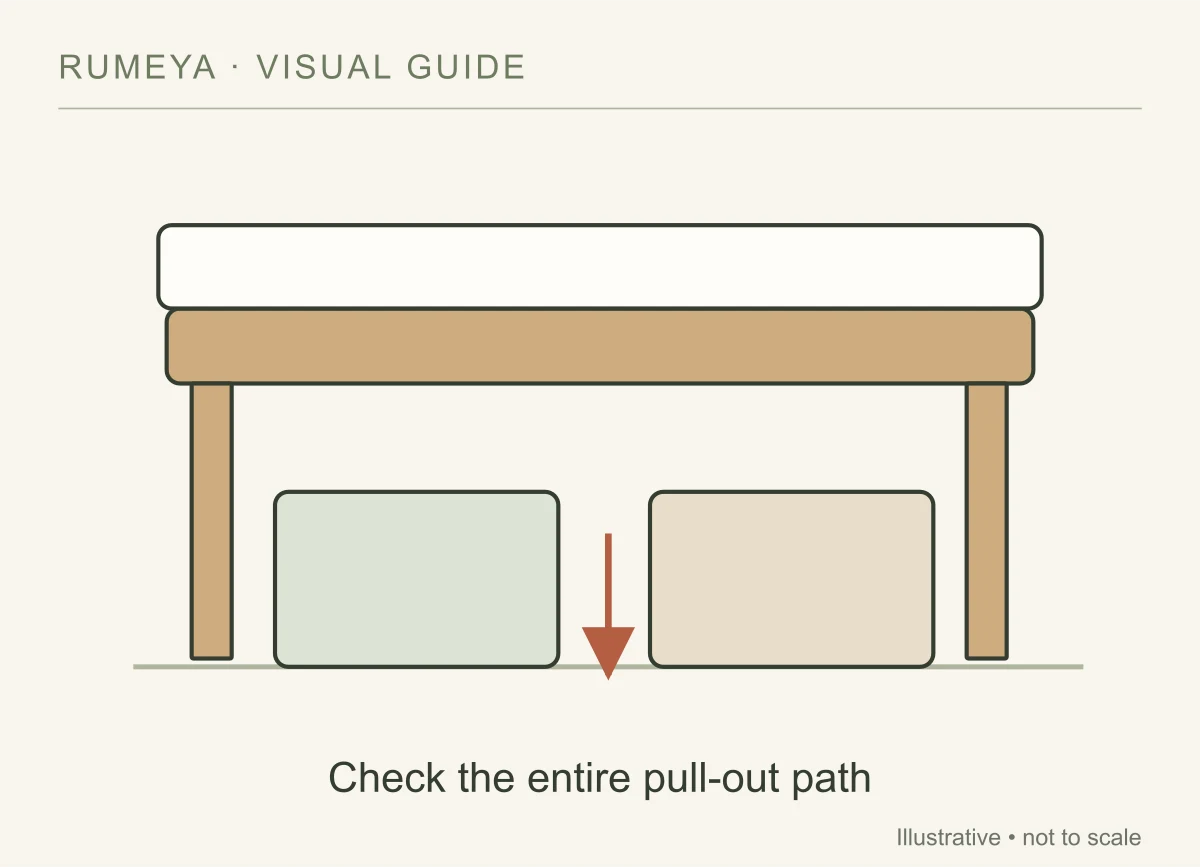
Start with the lowest part of the frame, not the highest open section you can see from the side. Check the center support, cross rails, and anything that hangs below the bed. If the bed sits on carpet, measure with the carpet in place.
- Height: floor to the lowest obstruction along the container’s route.
- Width and depth: the open areas between supports, not the mattress size.
- Exit space: room beside or beyond the bed to pull the container clear and open it.
Compare those figures with a container’s exterior dimensions, including wheels, handles, and lid. Interior capacity tells you what it holds; exterior dimensions tell you whether it fits.
Do not plan for an exact scrape-fit. You need to grip the handle and slide the container without lifting the bed. Try a cardboard box with a similar footprint before ordering several matching bins.
Compare six useful storage options
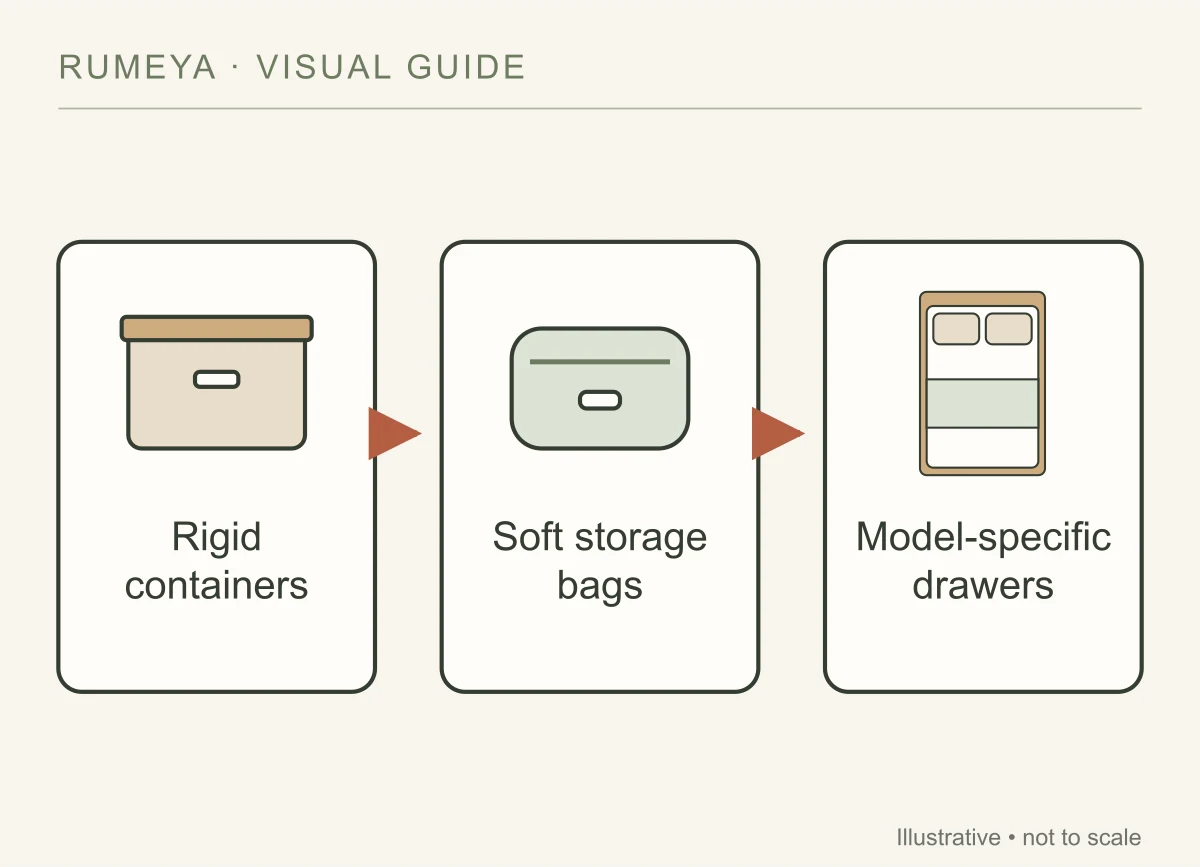
| Option | Useful for | Main tradeoff |
|---|---|---|
| Lidded plastic bins | Separate groups of everyday or seasonal items | Rigid dimensions; lid may need extra opening room |
| Zip-close fabric bags | Light, folded textiles | Can sag or bulge beyond listed dimensions |
| Wheeled under-bed boxes | Items you pull out regularly | Wheels add height and may resist thick carpet |
| Drawers made for your bed | A coordinated storage setup | Compatibility and pull-out space are model-specific |
| Divided shoe organizers | Shoes you can store clean and dry | Compartment sizes may not suit boots or larger pairs |
| An empty suitcase | Light, infrequently used belongings | Usually needs substantial space to open |
You do not need all six. One container style for the items you already own is easier to manage than several organizers bought for hypothetical future uses.
Choose containers by how often you need the contents
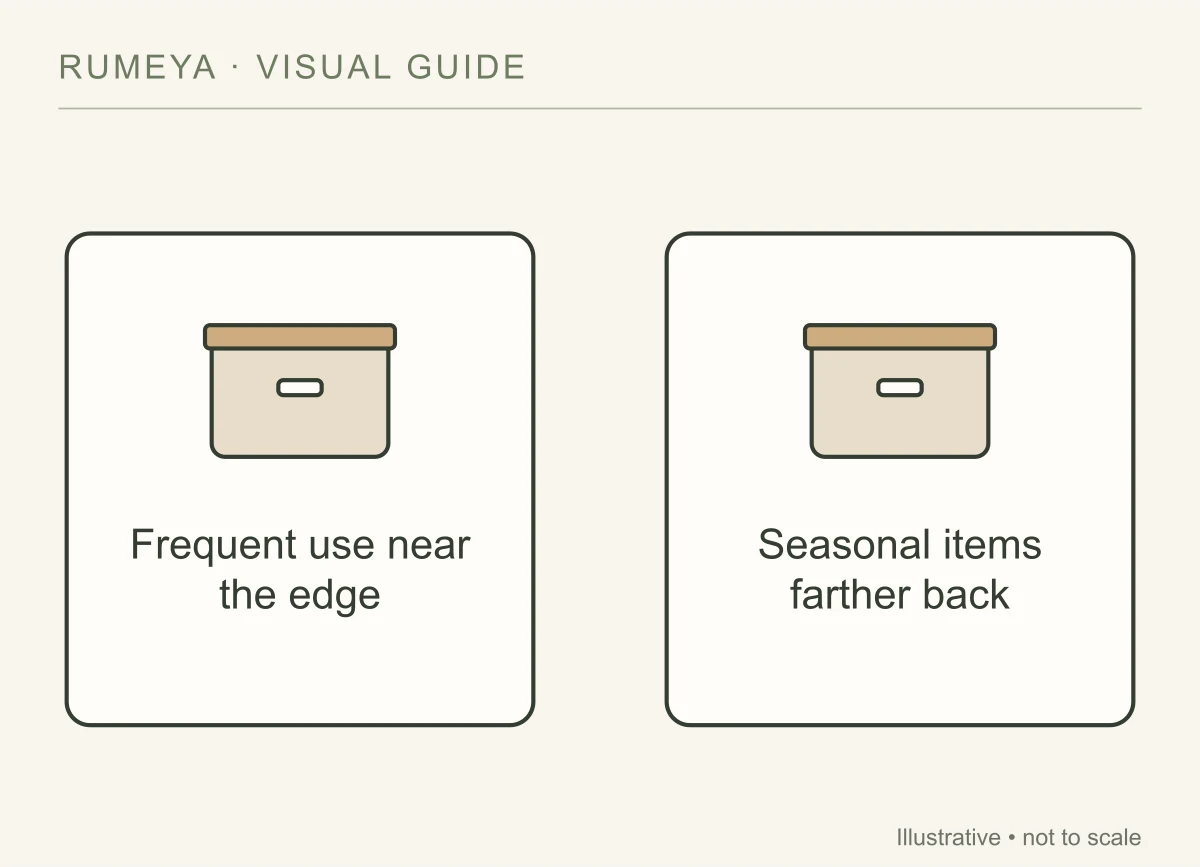
For regular access: use the easiest side
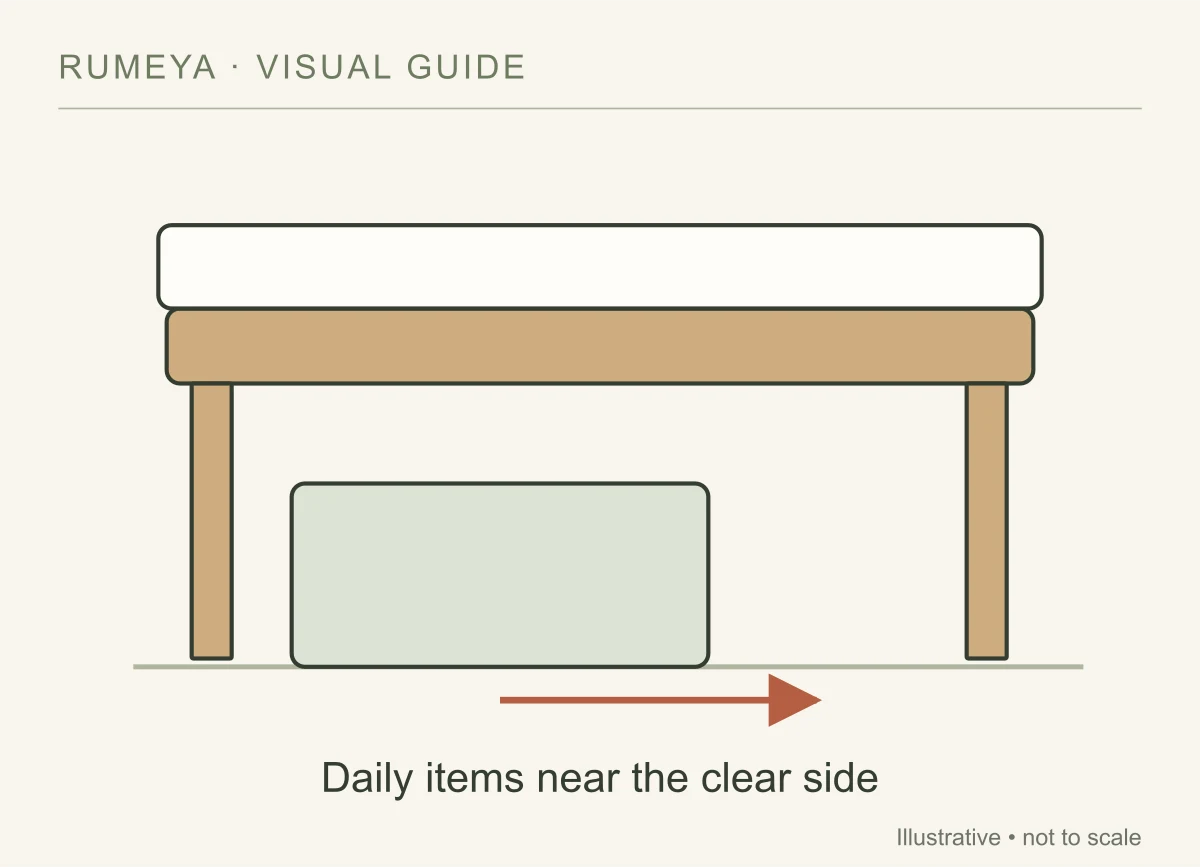
Keep spare bedding or frequently used accessories near the side with the clearest pull-out route. A sturdy handle matters more here than a perfectly matching color. Try the container when it is loaded; an empty bin may slide easily while a full one does not.
For occasional access: use the harder-to-reach space
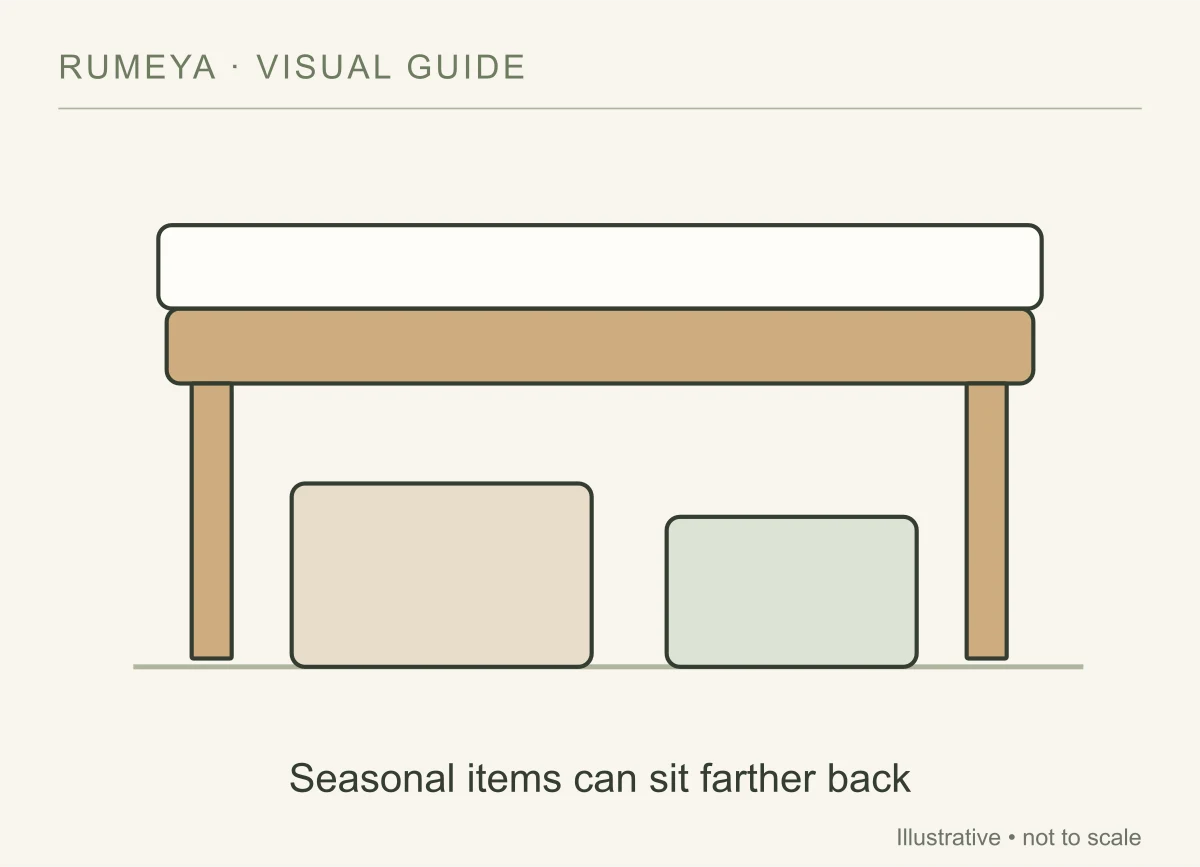
Seasonal clothing can go farther back if it is clean, dry, and suitable for storage there. Avoid packing so tightly that you cannot see what is inside or close the lid without forcing it. Follow garment care and storage instructions for delicate items.
For divided spaces: use more than one smaller container
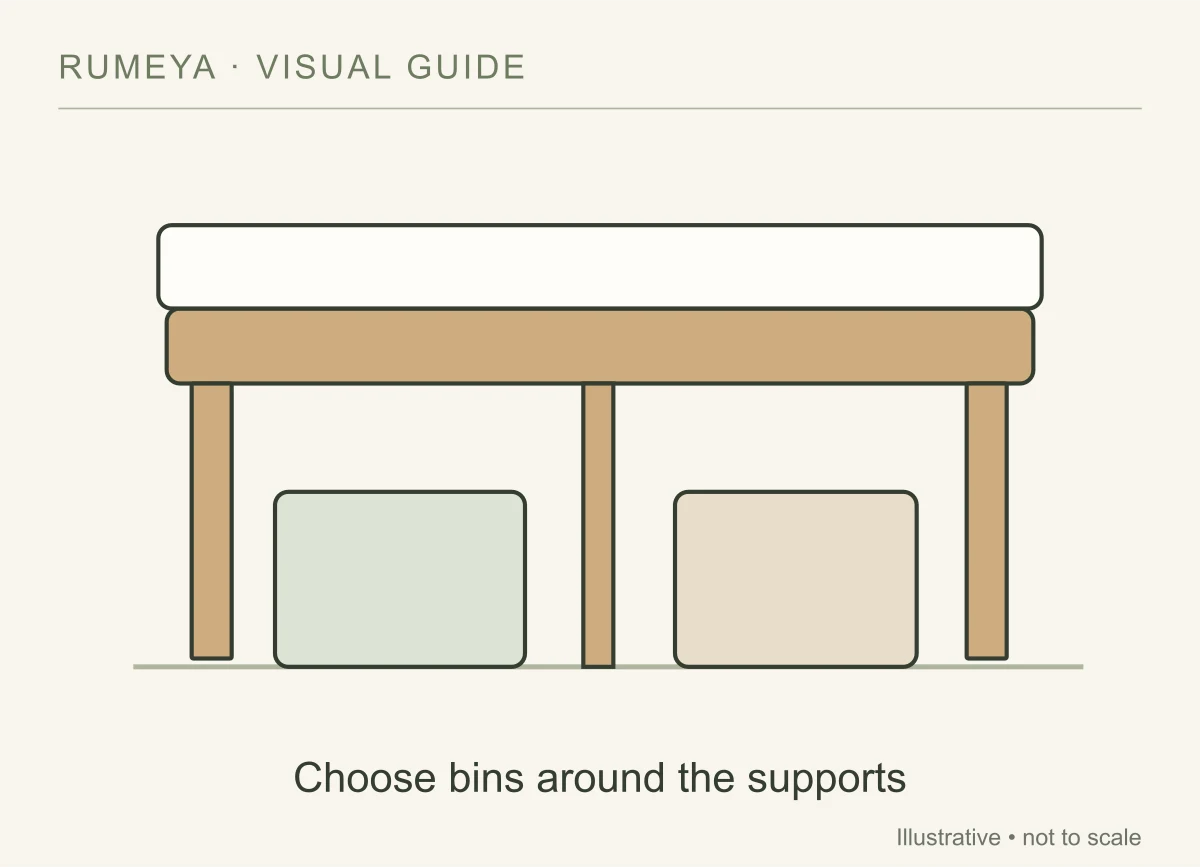
A center support can prevent one large bin from fitting. Two smaller bins may make better use of the openings, but each still needs its own route out. Do not remove supports or alter the bed to make an organizer fit.
A simple sizing example
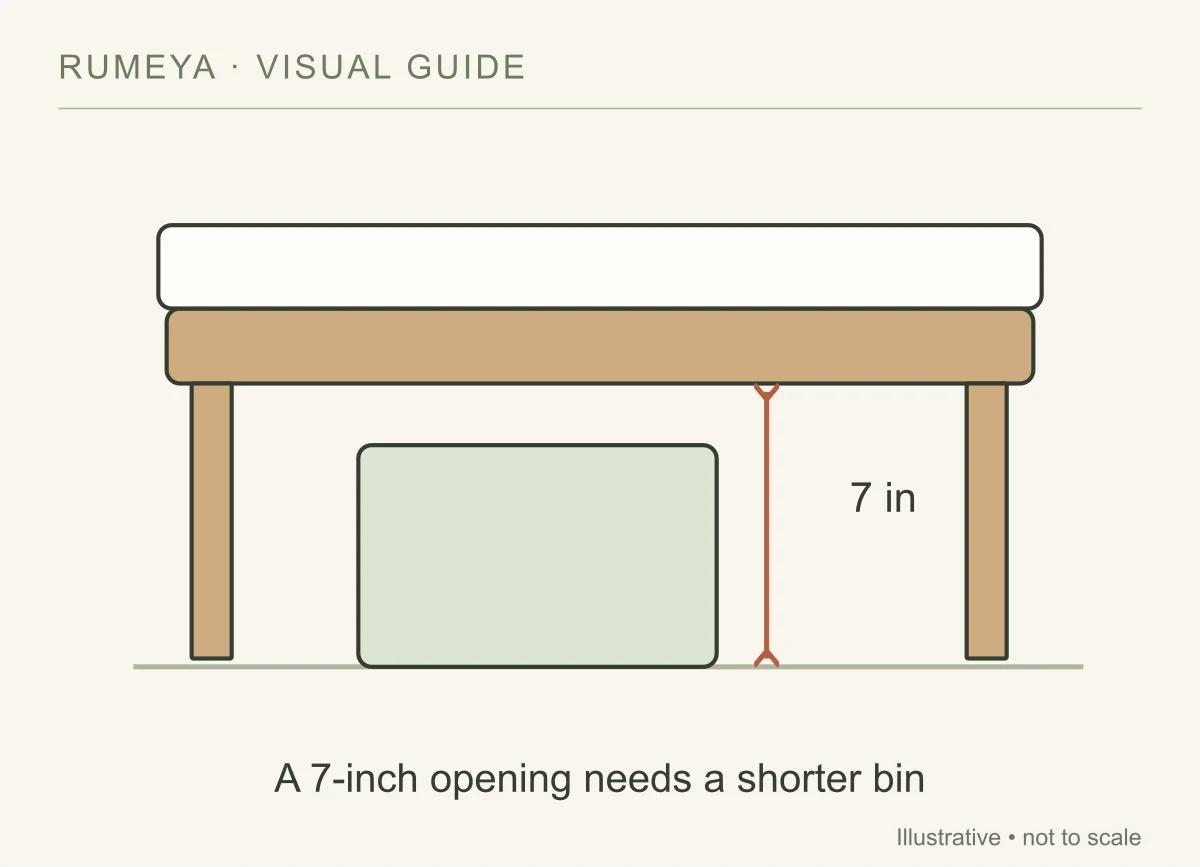
Suppose your lowest measured opening is 7 inches high. A bin listed as 7 inches tall leaves no allowance for a raised rug edge, a bulging lid, or a slightly uneven floor. A shorter container is a more practical candidate to test.
Now suppose the chosen container is 30 inches long, but a dresser leaves only 20 inches beside the bed. The bin might slide partly out without giving you enough room to lift its lid. Turning it, choosing a different size, or using another access side may help, but check the whole movement with a mock-up first.
These numbers are an example, not a universal clearance recommendation. Your frame, flooring, and container determine the usable space.
Use each container for one clear category
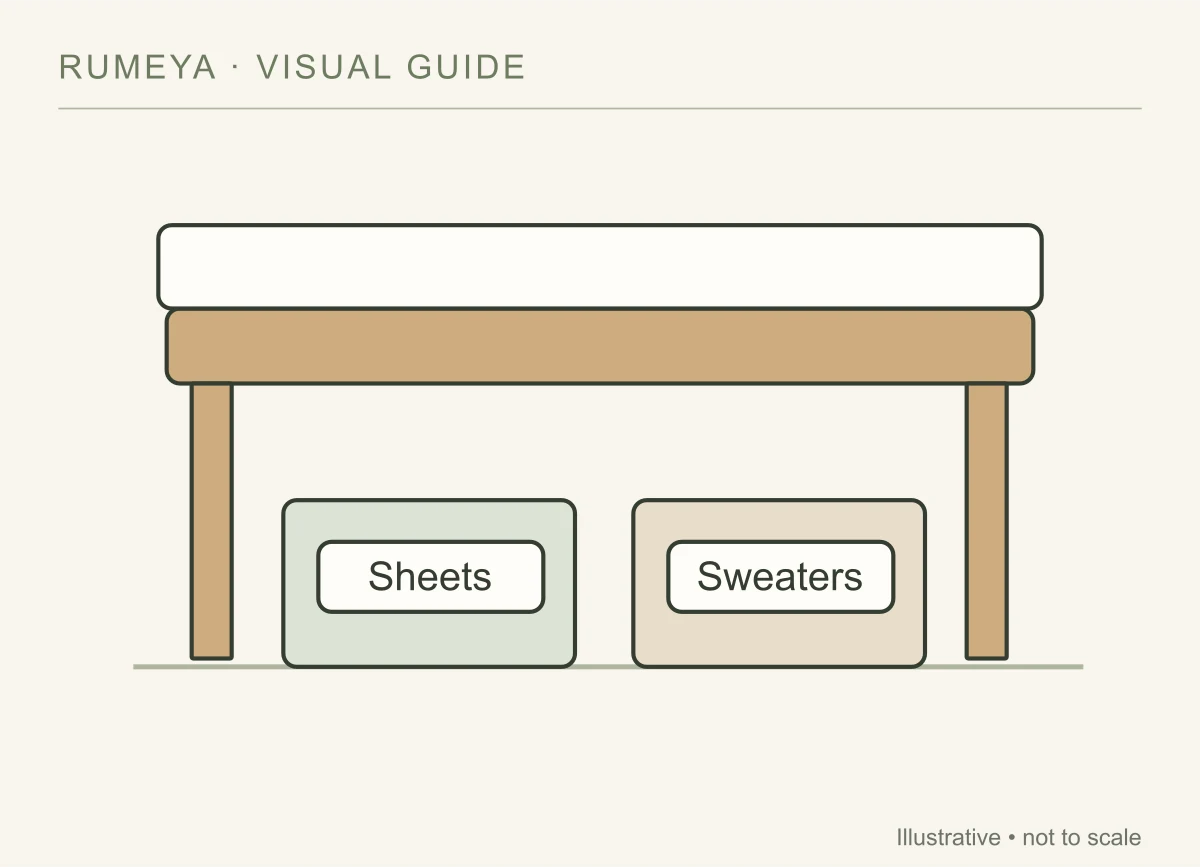
Sort the items before buying storage. Separate spare sheet sets, seasonal tops, shoes, or hobby supplies into groups. If a category is too large for one manageable container, divide it in a way that makes retrieval obvious, such as winter sweaters and summer clothes.
Label the end you can see when the bin is under the bed. A large, plain label is more useful than a beautiful label on the hidden lid. For opaque bags, a short inventory on a card inside the outer pocket can save repeated opening.
Store a complete sheet set together if that suits your routine. If several beds use different sizes, put the size on the visible label. Avoid vague labels such as “miscellaneous”; they make it harder to know where something should go back.
Check the conditions under the bed
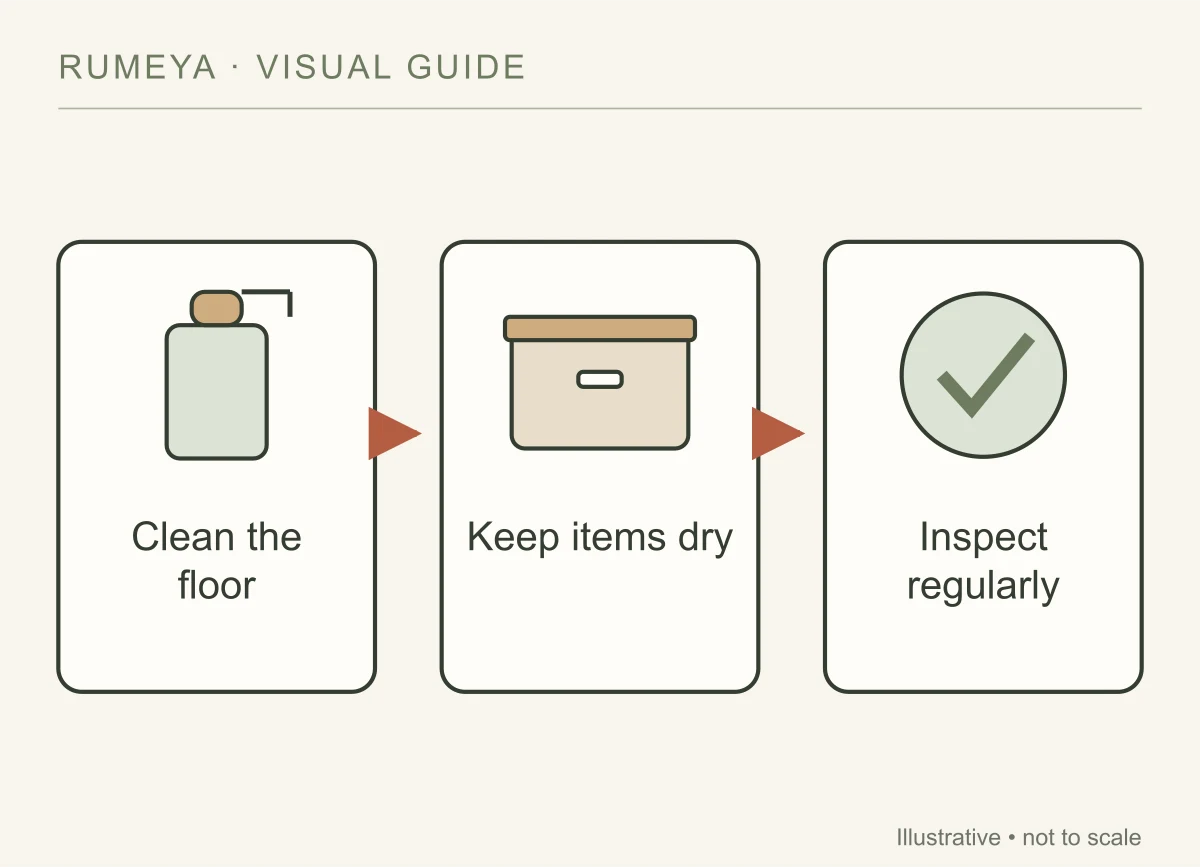
Clean the floor before putting containers away and leave yourself a way to clean it again. Periodically pull the storage out to check for dust, dampness, or pests. If you find moisture, address its source rather than enclosing belongings and forgetting about it.
Keep food and anything that requires specific environmental conditions somewhere more suitable. Do not block heating or ventilation openings. If you are considering bed risers for extra height, first check the bed manufacturer’s requirements and the risers’ compatibility and load rating.
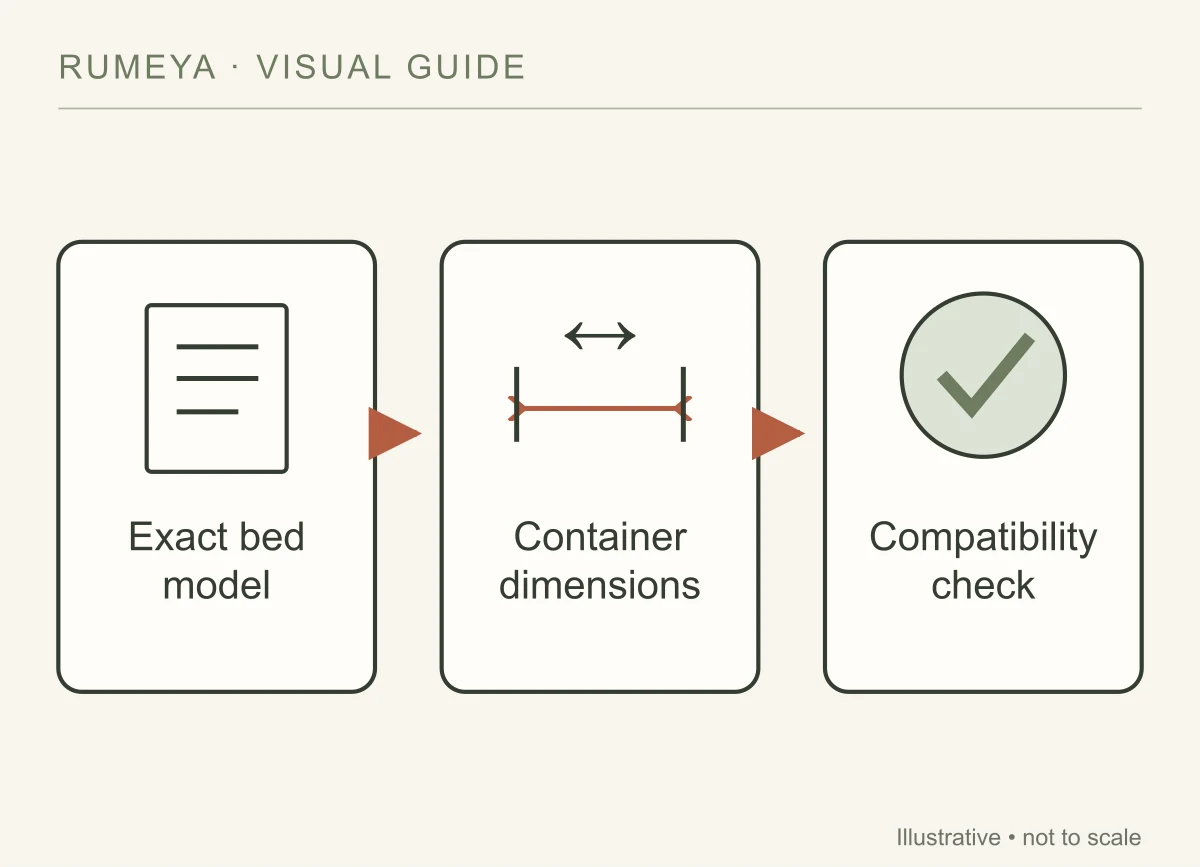
Built-in-looking drawers are not universally interchangeable. For instance, IKEA’s MALM under-bed boxes are sold for a particular bed configuration. Check your exact model before ordering a matching drawer.
Make a small bedroom easier to use
Storage should support the layout, not determine where you have to walk. If the bed is already close to the dresser, review the furniture positions in our queen-bed layout guide before buying more containers.
- Sort the actual items you want to store.
- Measure every opening and support, plus the route out.
- Test one loaded container before buying a set.
- Label the visible side by category or bedding size.
- Pull containers out regularly to clean and inspect the space.
Common questions
Are clear bins better than fabric bags?
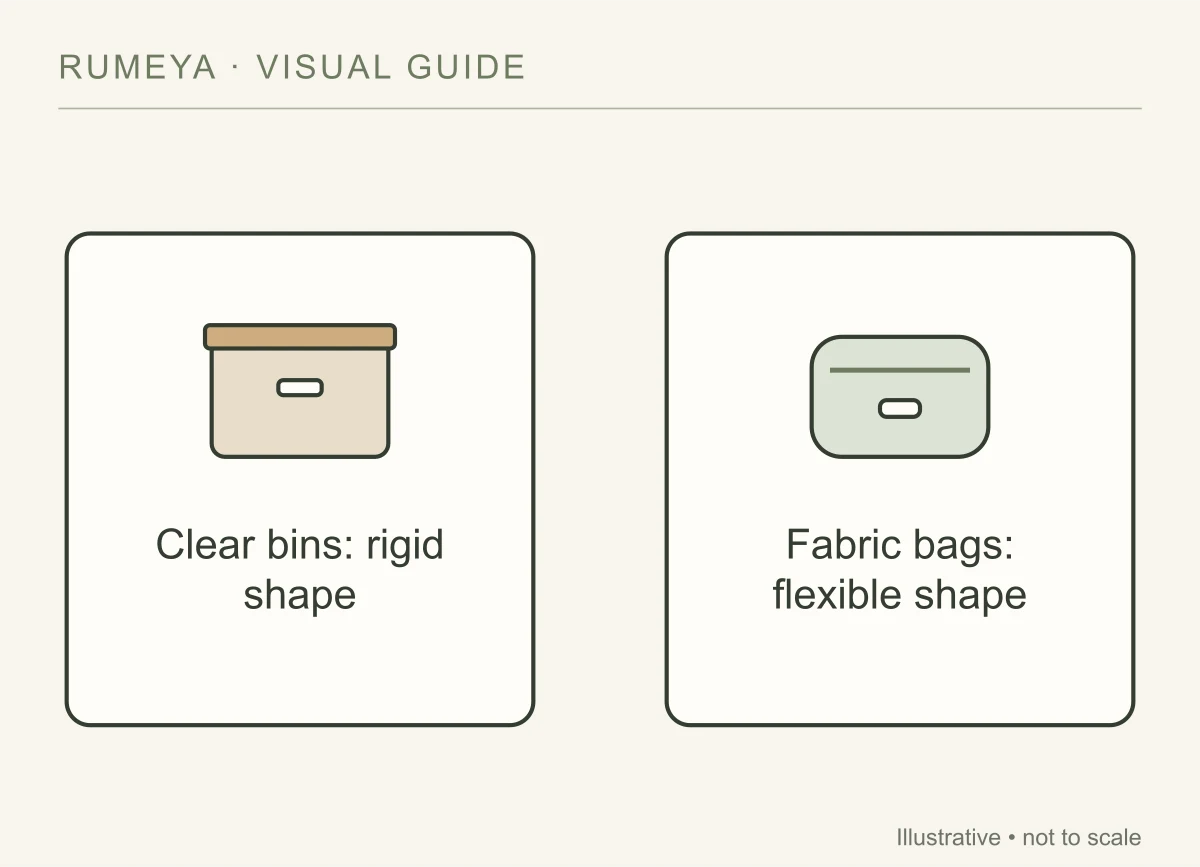
Clear bins make contents easier to identify and hold a fixed shape. Fabric bags can be lighter and more flexible. Neither is automatically the best choice: compare access, the items being stored, and whether the loaded container stays within your measured clearance.
Can I use the whole area under a queen bed?
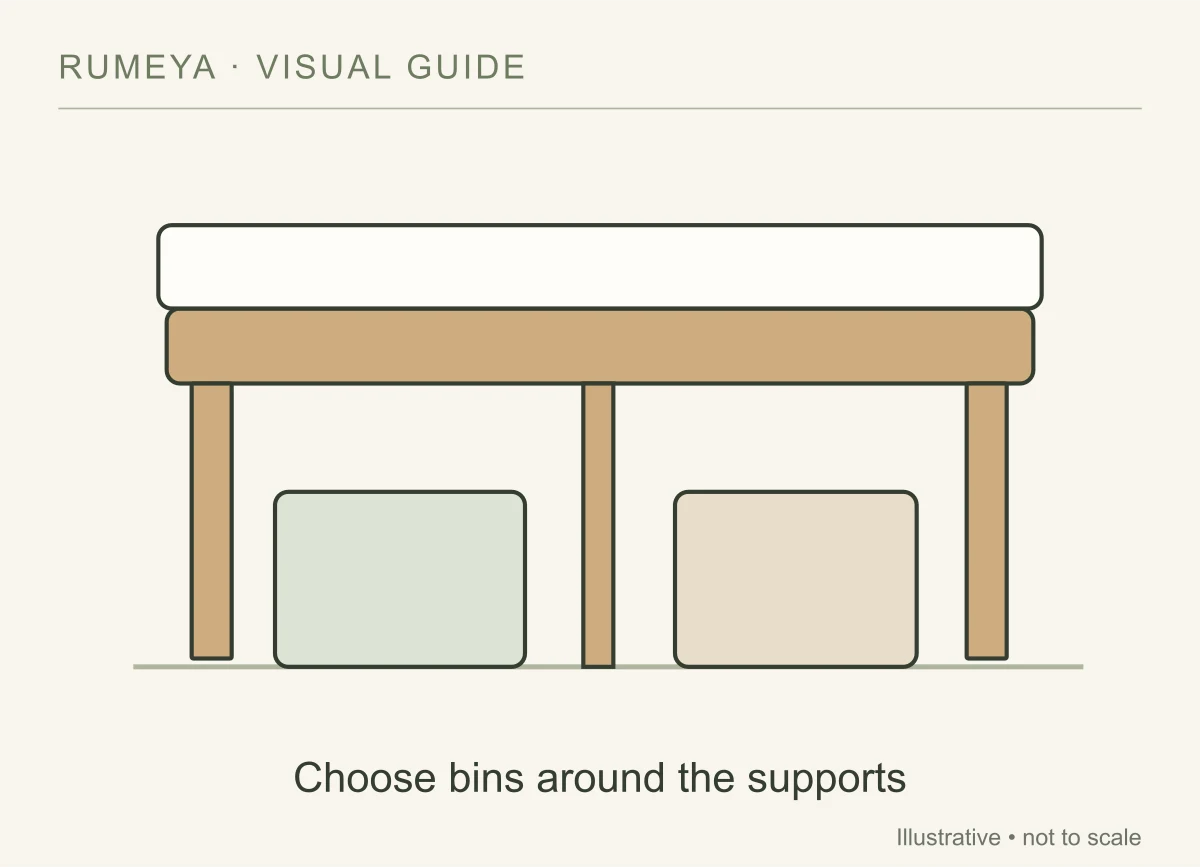
Usually not as one uninterrupted rectangle. Legs and supports divide the space, and a wall may limit access from one side. Map the usable openings under your actual frame rather than calculating storage from the mattress dimensions.
Sources and further reading