A nightstand can take up a surprising amount of room beside a bed. If yours holds a phone, glasses, and one book, you may be able to replace it with something much smaller. If it holds a week’s worth of essentials, a tiny decorative shelf may only move the clutter somewhere else.
Start by emptying the nightstand and separating what you use every night from what could live in a drawer across the room. Then choose a bedside setup for the smaller pile. These nine options solve different space problems.
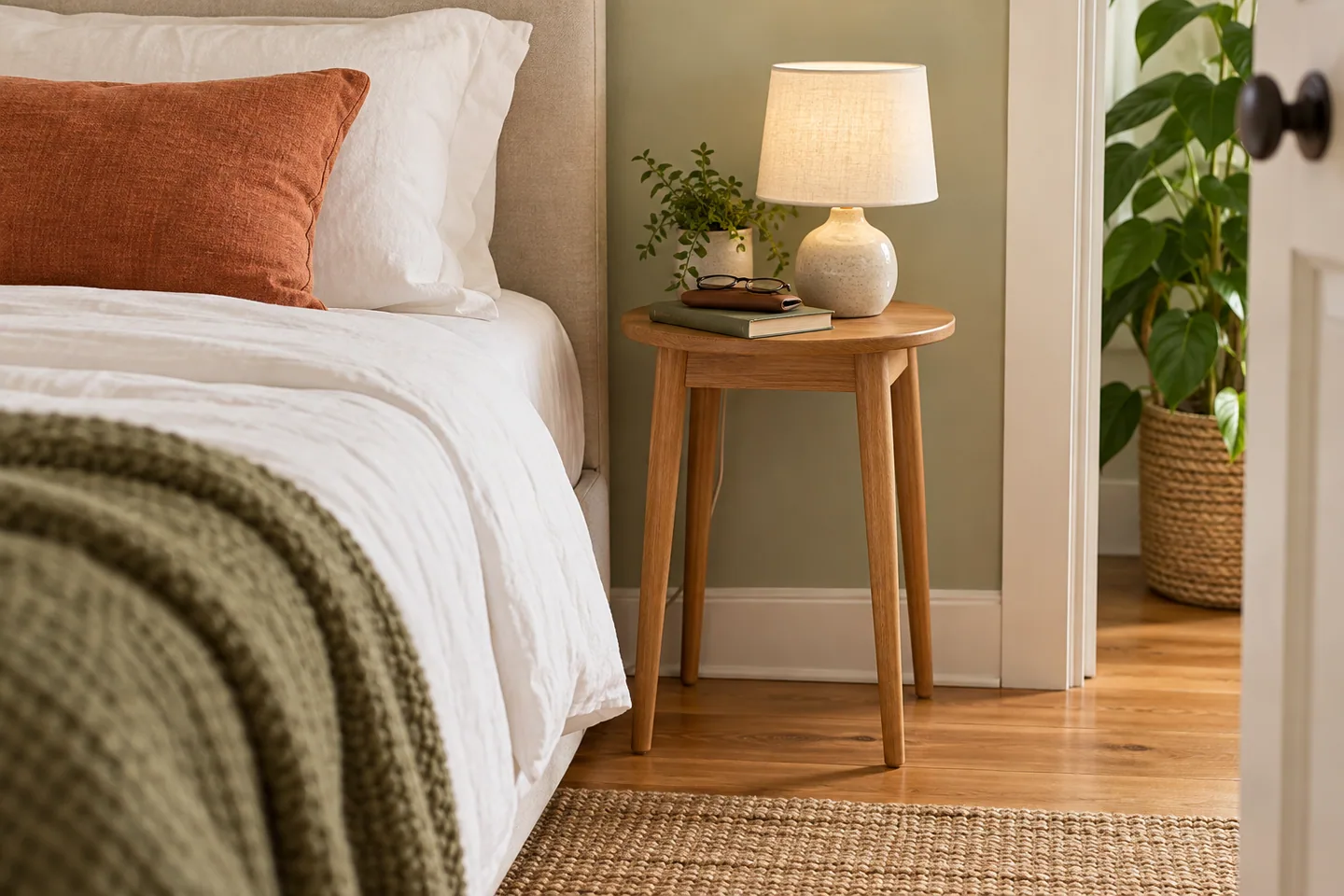
1. A slim side table
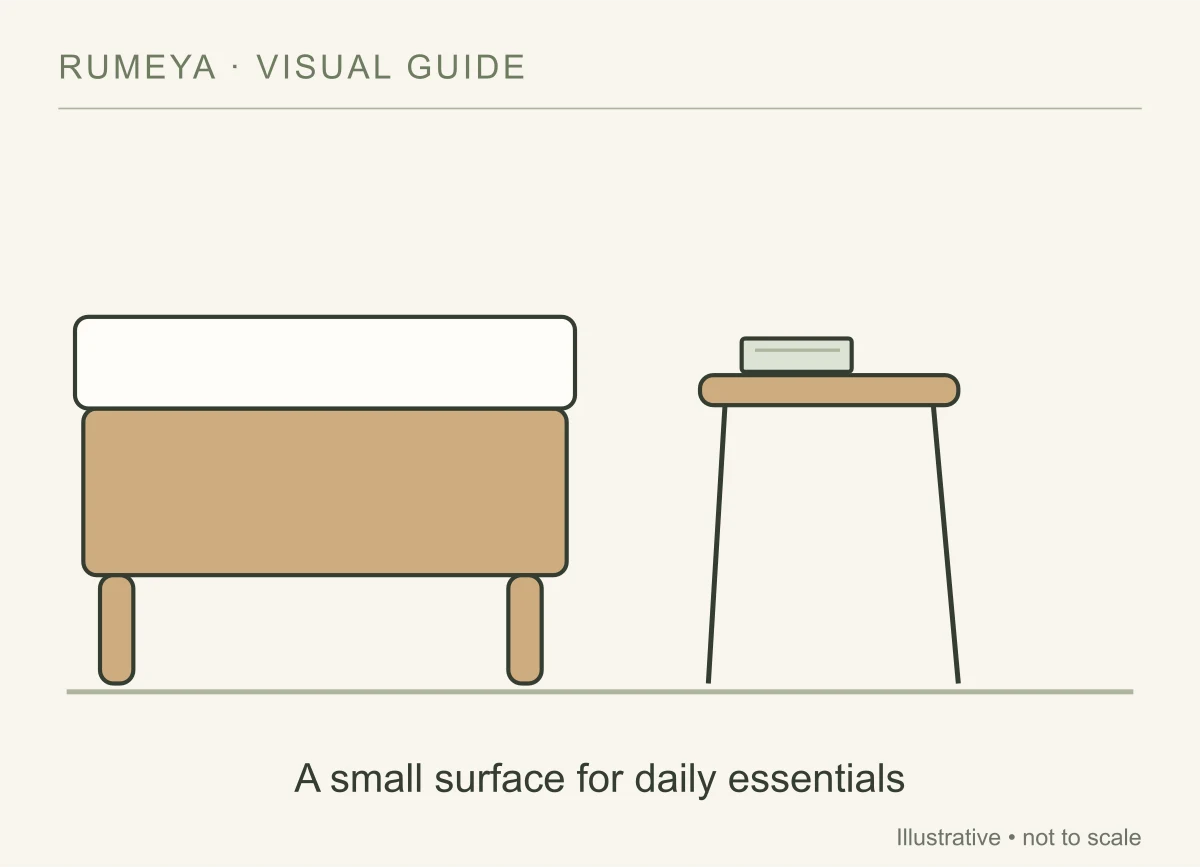
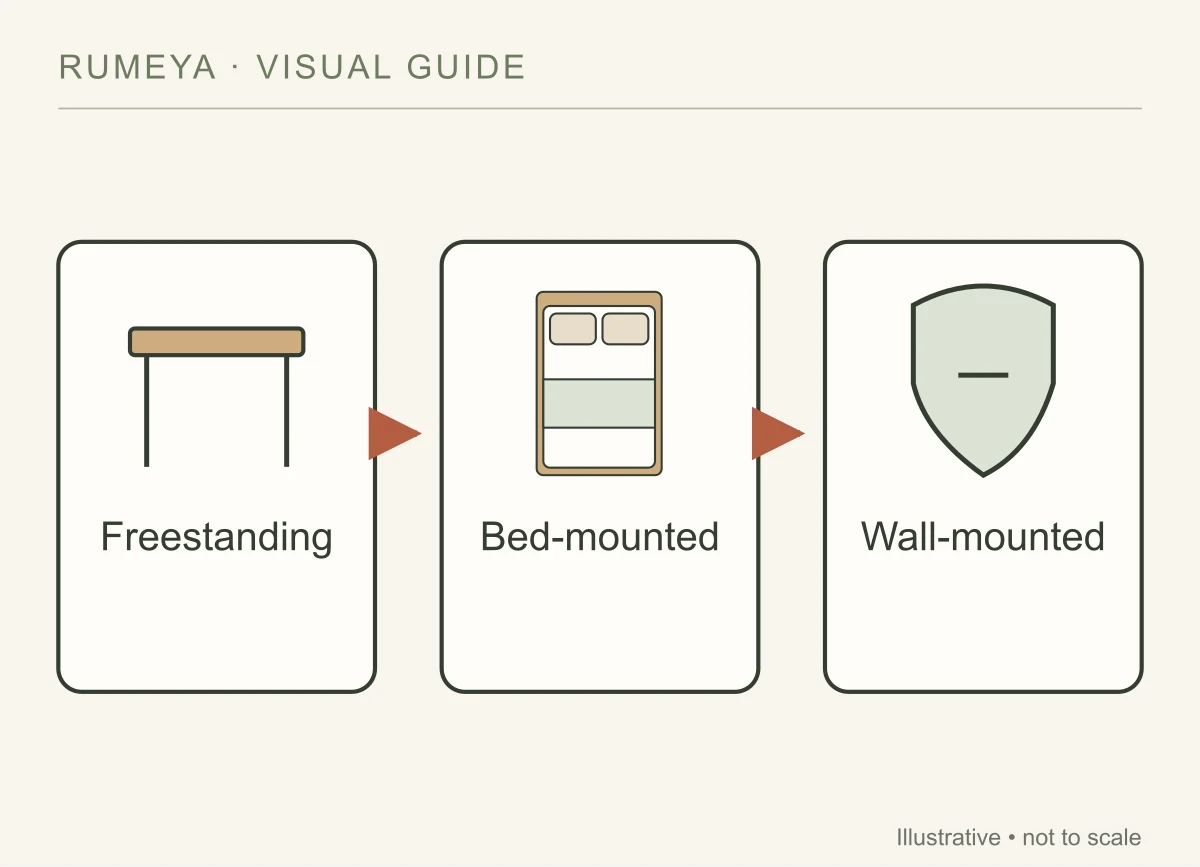
Look beyond the bedroom section. A narrow end table designed for a living room can work beside a bed, especially when you need a real tabletop but no drawers. Measure the widest part of the base as well as the top.
A lower shelf can hold a book or small basket. Keep the top available for the things you reach for in the dark. This is a straightforward choice for renters because it does not require wall installation.
2. A sturdy stool
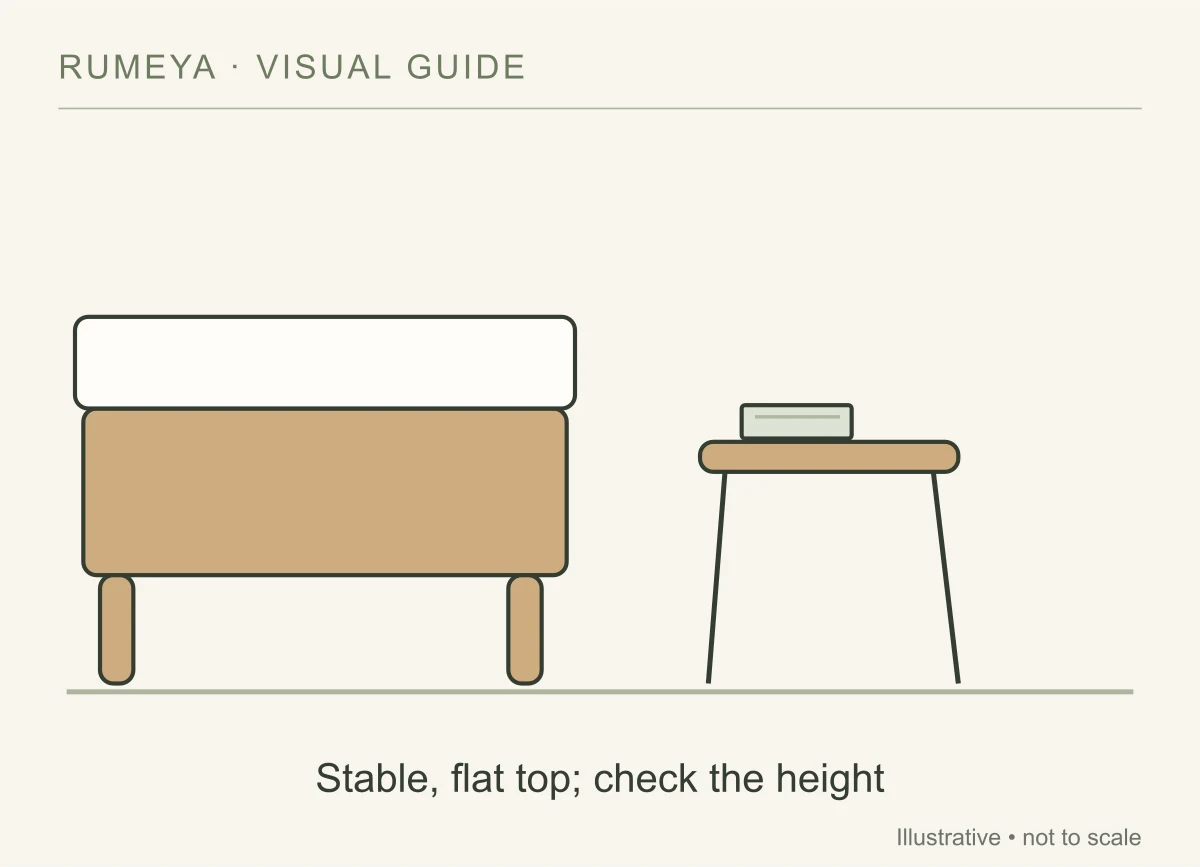
A flat-topped, stable stool can hold a small bedside collection and move elsewhere when you need the floor clear. Use one you already own to test the idea before buying anything.
Check that the top is level and large enough for your items. A curved seat, uneven woven surface, or lightweight folding stool may be awkward for a glass of water. Do not add a tall stack of books to raise the surface; choose a better height instead.
3. A C-shaped side table
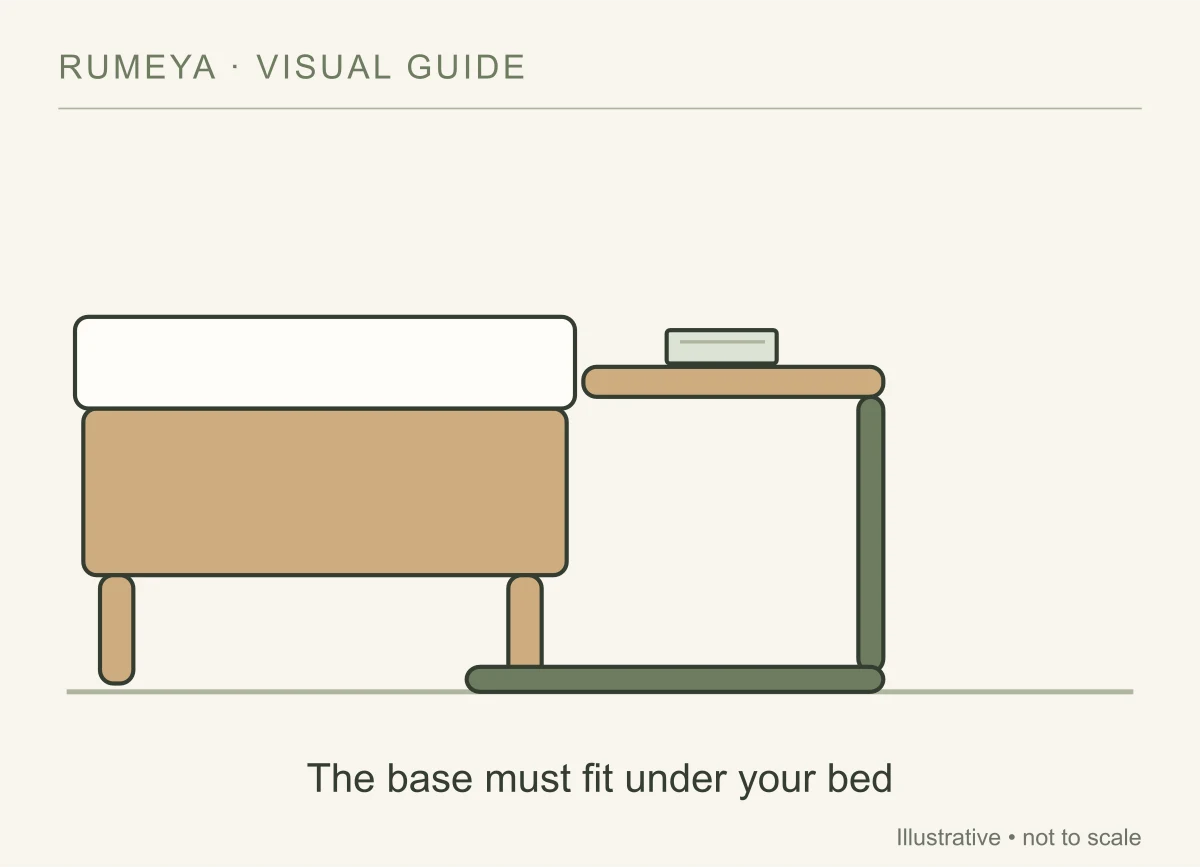
Some C-shaped tables have a base that slides under furniture, bringing the top closer without taking up the same floor area as a four-legged table. Whether that works beside your bed depends on the frame, legs, and clearance underneath.
Measure the bottom opening and check the table’s stability in the intended position. A storage bed with a solid base may rule this option out. Make sure the tabletop does not obstruct getting out of bed.
4. A small wall-mounted shelf
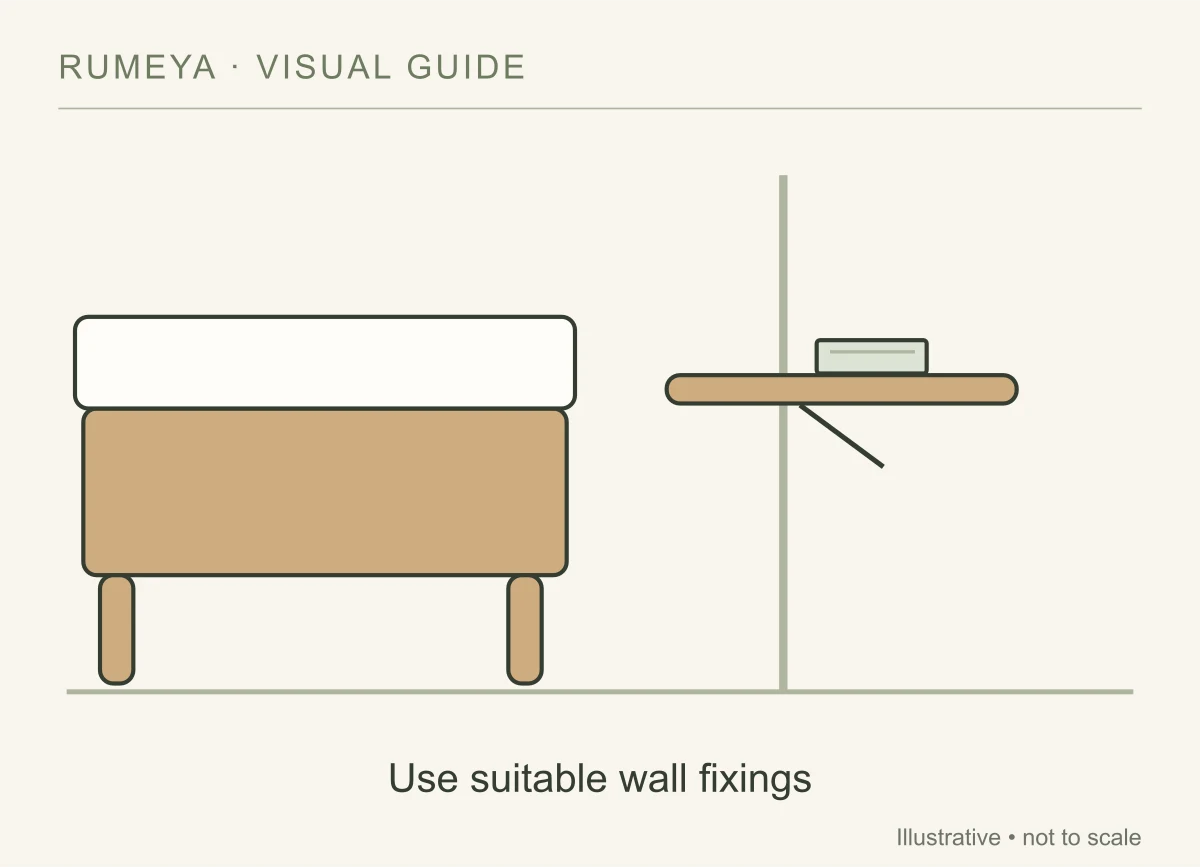
A properly installed shelf frees the floor and lets you choose its height. It can suit a tight gap where a table base will not fit. Use a paper outline to test the size and position before drilling.
Follow the shelf’s mounting instructions for your wall type and planned load. Get any permission required by your lease. Keep the surface modest: a shelf sized for a phone and glasses should not gradually become a stack of heavy books.
5. A bedside caddy
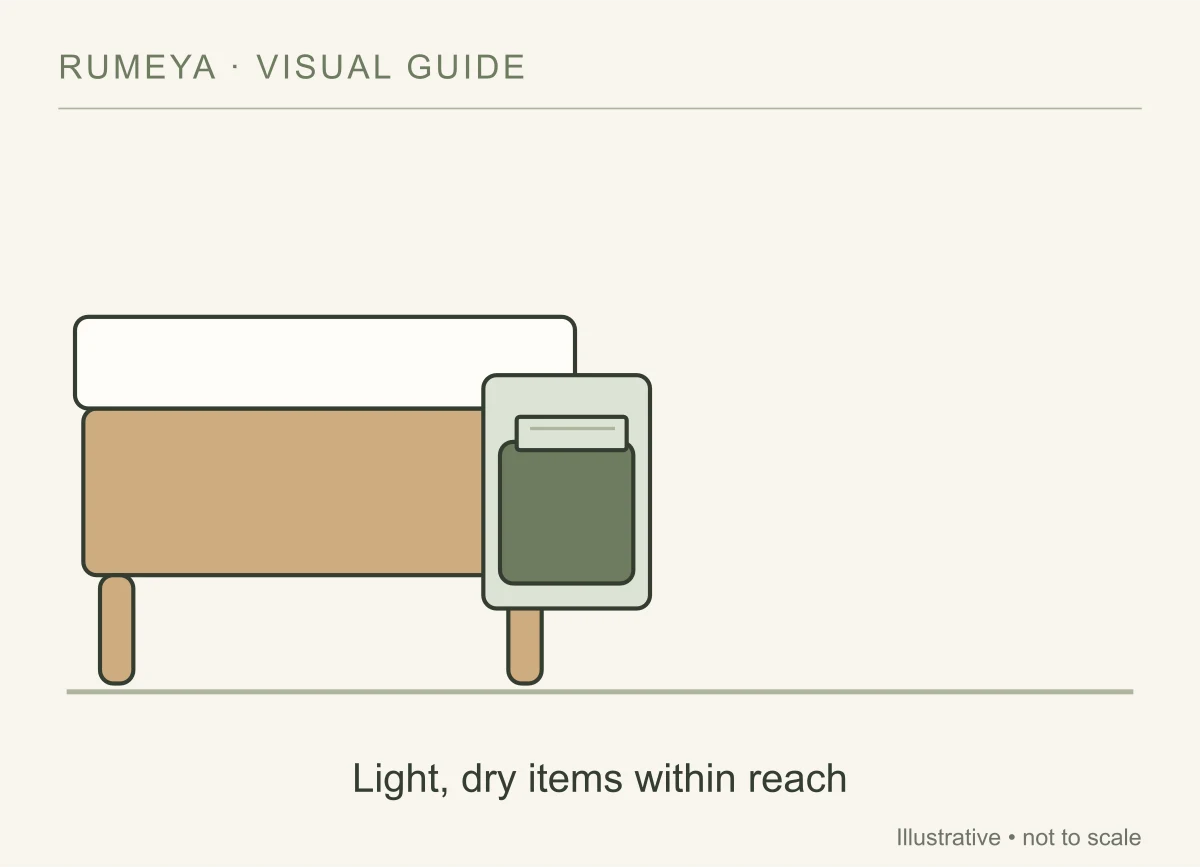
A fabric caddy can keep a paperback, glasses case, or remote within reach without adding furniture. Choose an attachment that is compatible with the bed, and check that the loaded pockets stay in place when you get up.
This works best for dry, lightweight items. Keep drinks on a stable surface and follow charging-device instructions rather than tucking a warm charger into fabric. A caddy also leaves the floor easier to reach for cleaning.
6. A clamp-on bed shelf
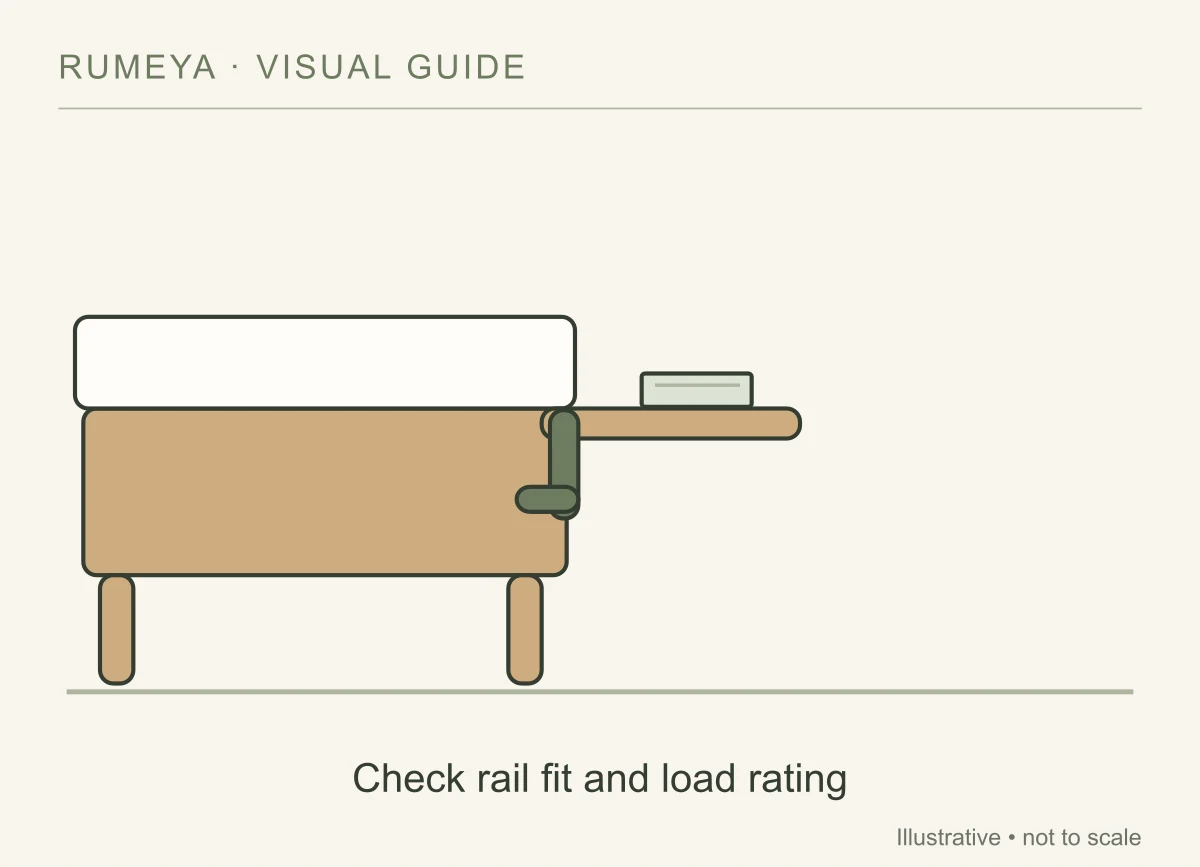
A shelf made to clamp onto a bed rail can provide a small surface where there is no space for a separate table. Check the exact rail shape, thickness, and material the product supports. Upholstered, rounded, and unusually thick rails may be incompatible.
Respect the load limit and test the empty shelf for movement after installation. It is a place for a few essentials, not a grab bar for getting out of bed. Consider whether the clamp will interfere with bedding or damage the frame.
7. A narrow rolling cart
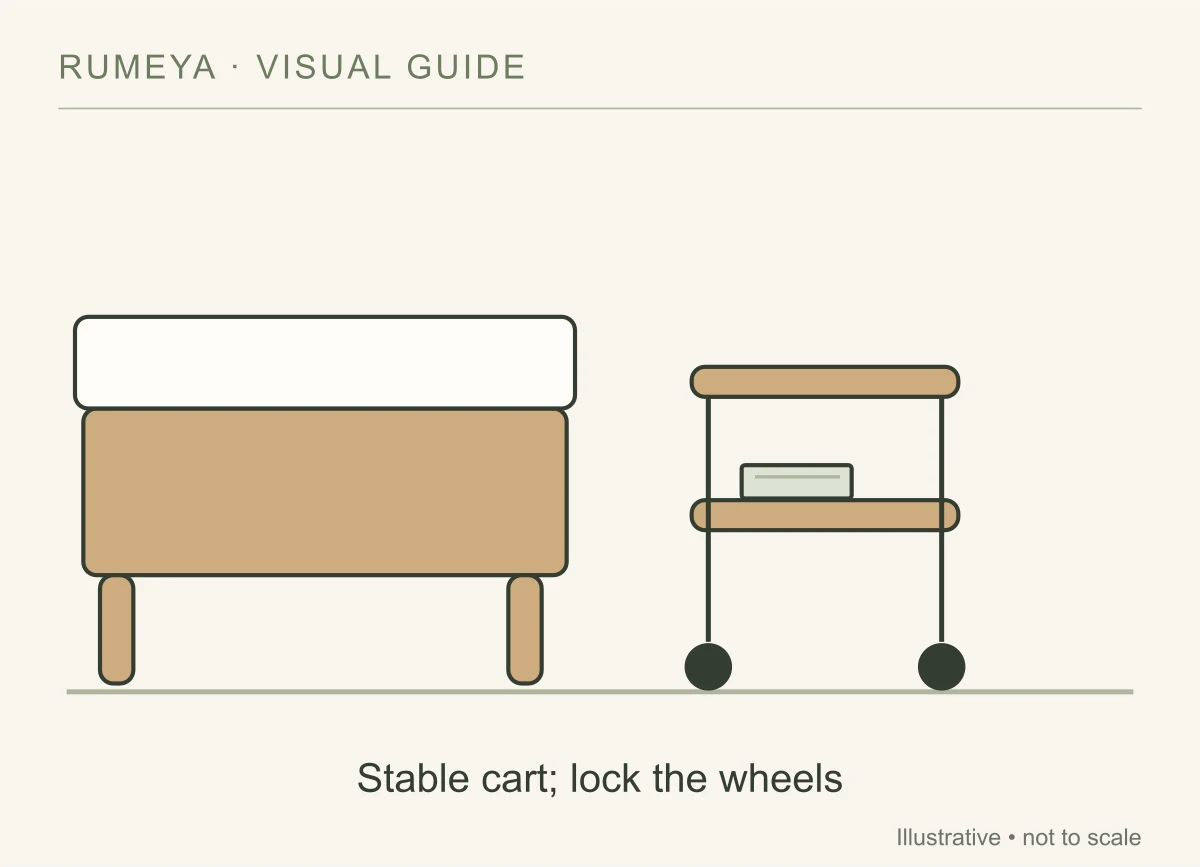
A small cart can offer more storage than a single tabletop. It is useful when you need several items nearby and want to move the whole unit for cleaning. Choose a stable design and check how the casters behave on your floor.
Use wheel locks if the cart has them, keep heavier items low, and avoid a top-heavy arrangement. A cart that shifts when you reach for it may be better as storage elsewhere. Make sure any cords do not pull tight when it moves.
8. A dresser that already sits beside the bed
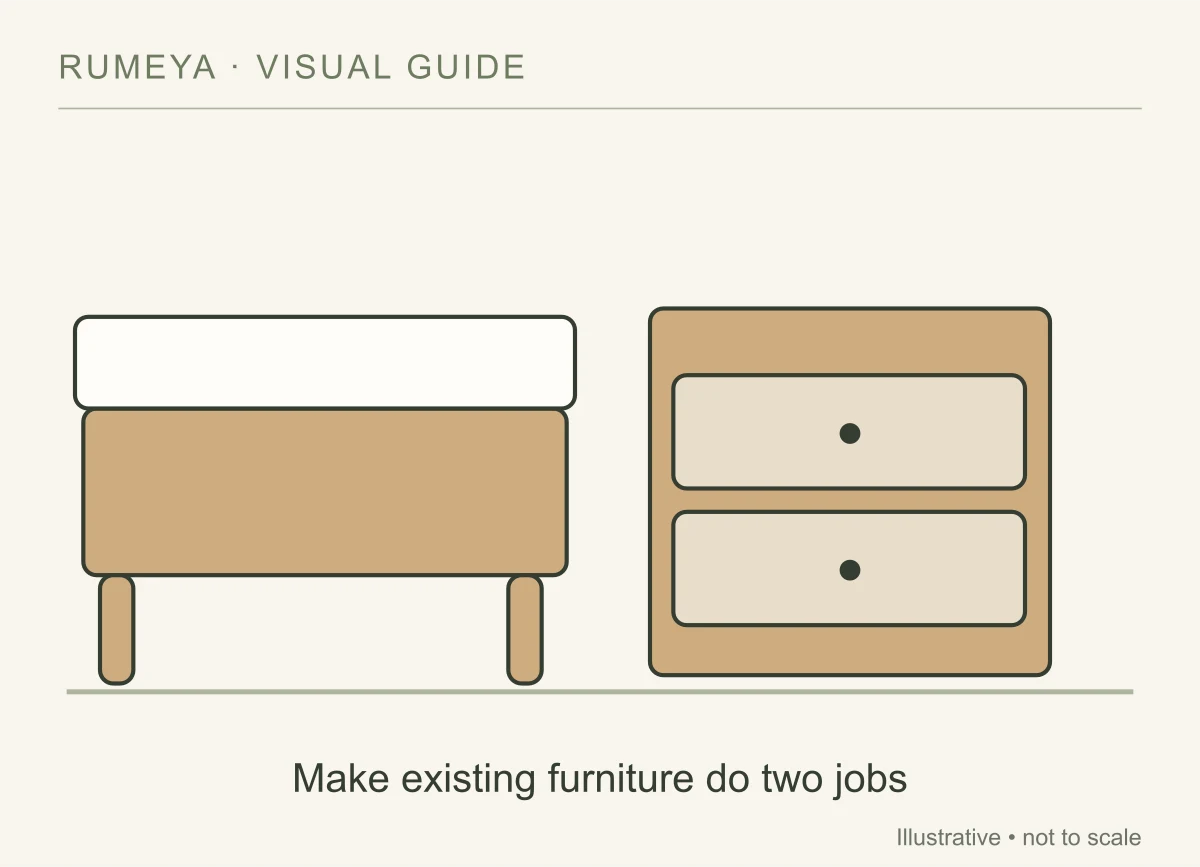
In some layouts, the end of a dresser can do double duty. Clear a small section of its top for bedtime items instead of squeezing an extra table into the gap.
Try reaching it while lying down and sitting up. A tall dresser may be inconvenient, and its drawers still need to open fully. If you keep leaning over or stretching, use the dresser for storage and choose a closer place for the few items you need at night.
9. A headboard with built-in storage
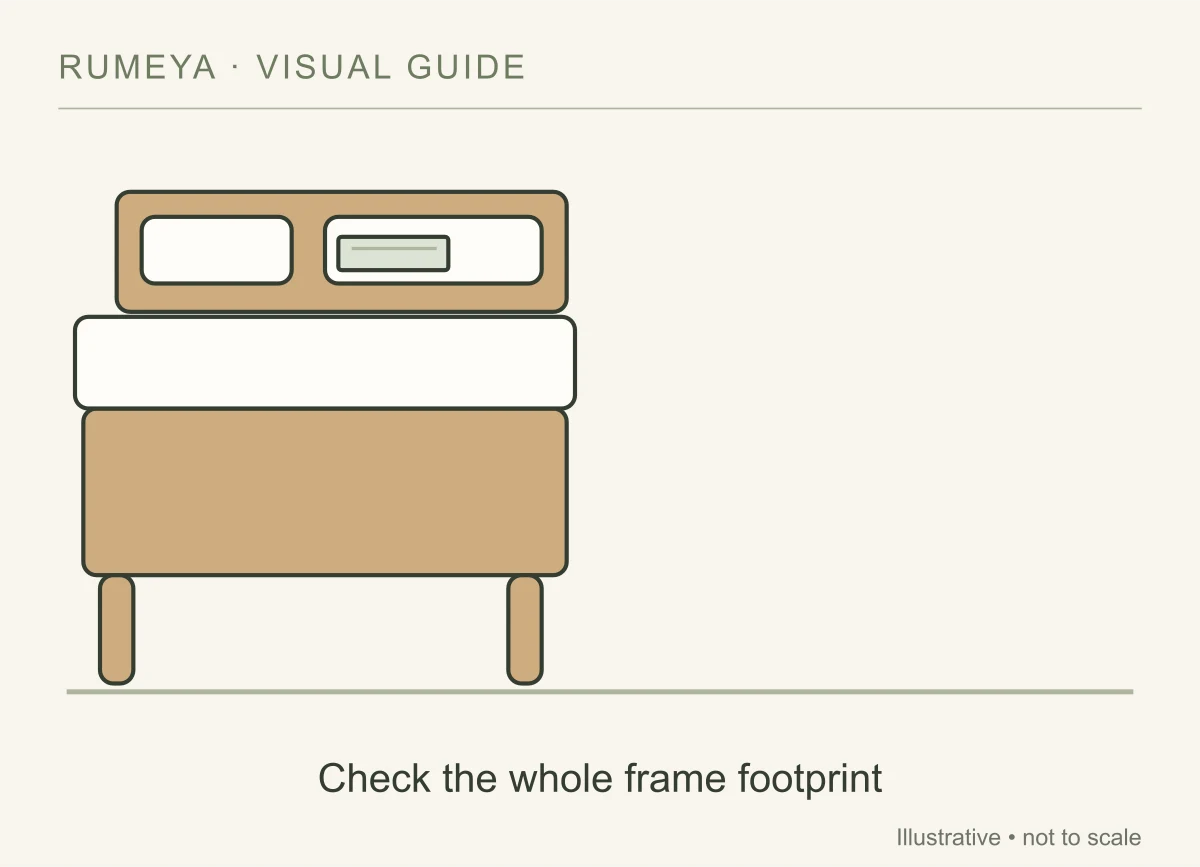
A headboard designed with a ledge or compartments can reduce the need for separate bedside furniture. It makes the most sense when you are already replacing the bed, rather than buying a large new piece to solve a small storage problem.
Check the whole footprint: a deep storage headboard can push the mattress farther into the room. Follow its assembly and loading instructions, and keep heavy or breakable objects away from positions where they could fall onto a sleeper.
Compare the options at a glance
| Your priority | Options to consider | Check first |
|---|---|---|
| No drilling | Slim table, stool, or caddy | Stability and usable surface |
| Clear floor underneath | Wall shelf or compatible bed shelf | Installation and load limits |
| More than a few essentials | Cart or existing dresser | Reach and drawer access |
| Almost no gap beside the bed | Caddy or built-in headboard storage | Bed compatibility and total footprint |
If the problem is the bed’s position, a smaller table may only help a little. Compare the three arrangements in our small bedroom queen-bed guide before replacing furniture.
Choose the height by testing your reach
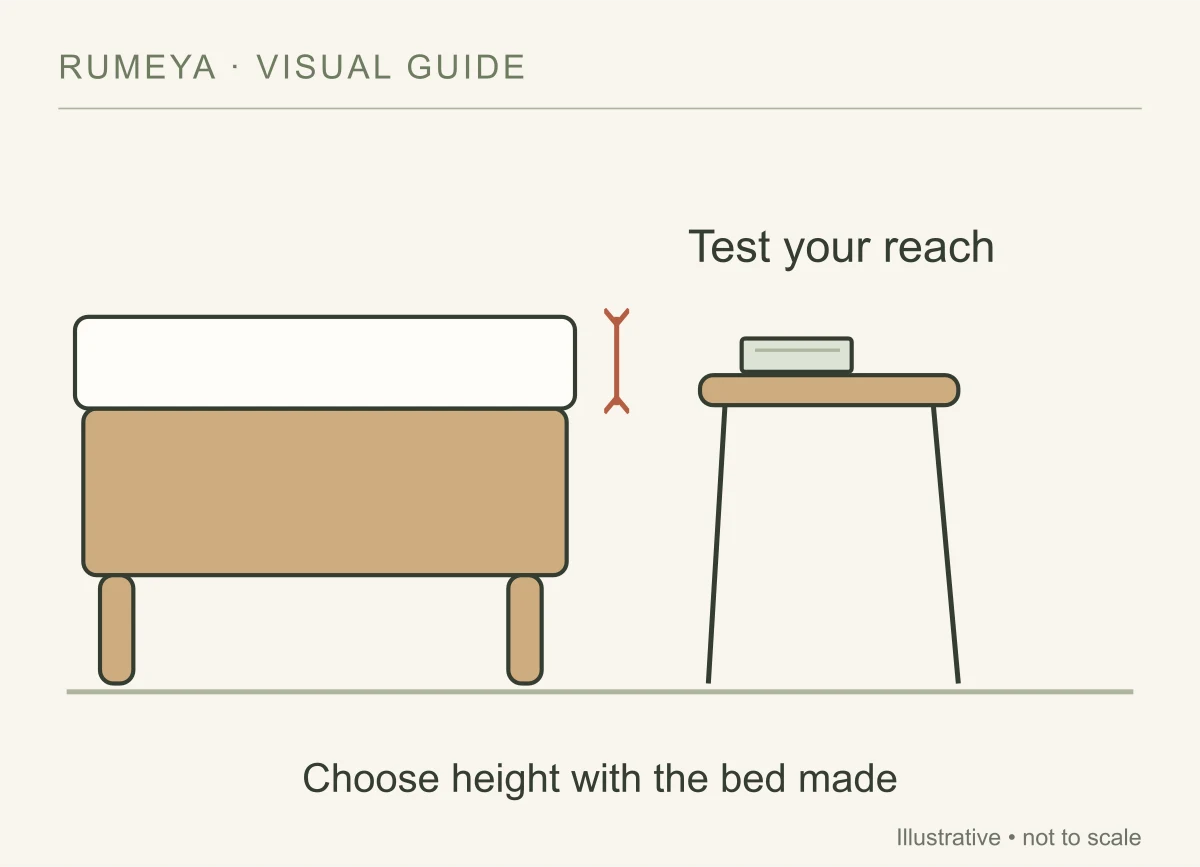
There is no reason to buy a surface simply because its label says “bedside.” Measure the height of your made bed, then try reaching a temporary surface at the height you are considering. Test from your normal sleeping position as well as sitting up.
Leave room for bedding to hang without sweeping items off the edge. If a lamp occupies most of the top, consider a smaller lamp or a properly installed wall light before choosing a larger table.
A note on adhesive mounting
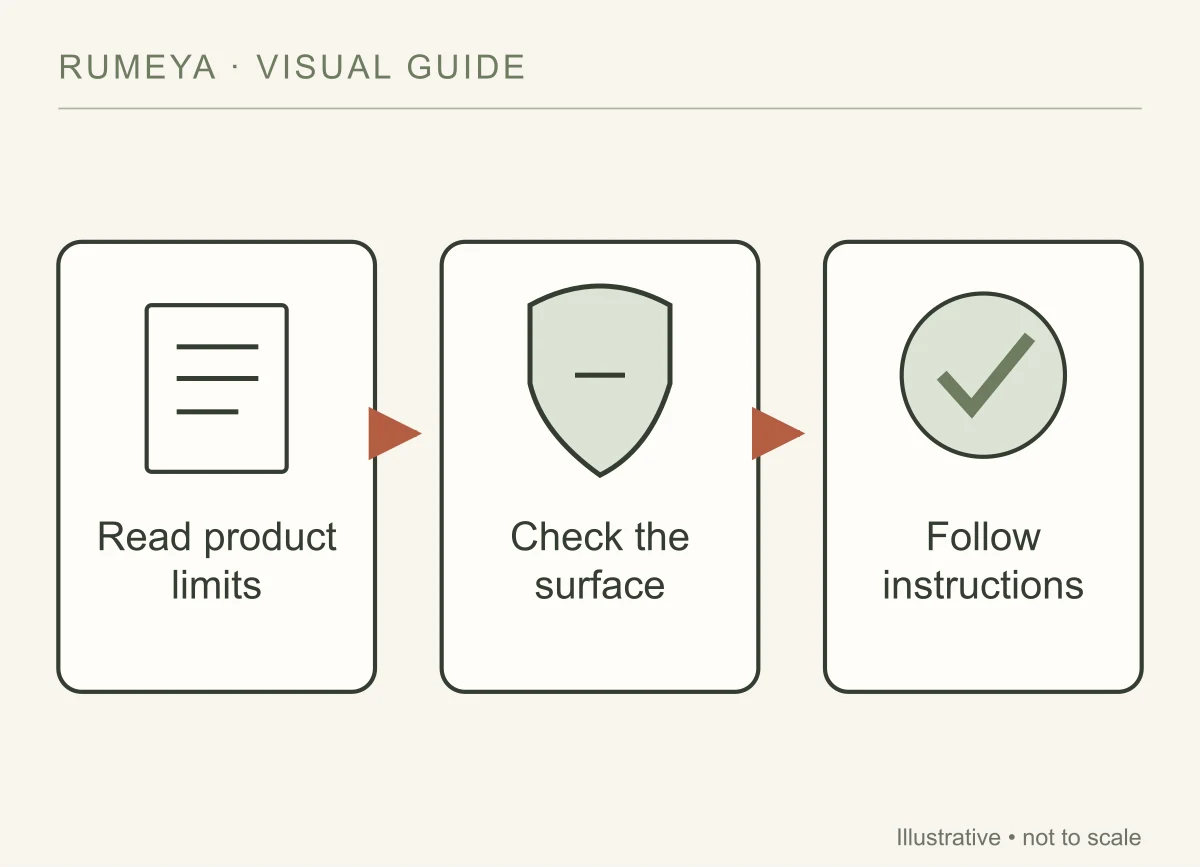
Do not assume removable strips can support any shelf. Command’s product guidance makes weight limits and suitable surfaces product-specific. Choose mounting hardware intended for the item, wall, and load; adding extra strips is not a substitute for following the product instructions.
Before you swap out the nightstand
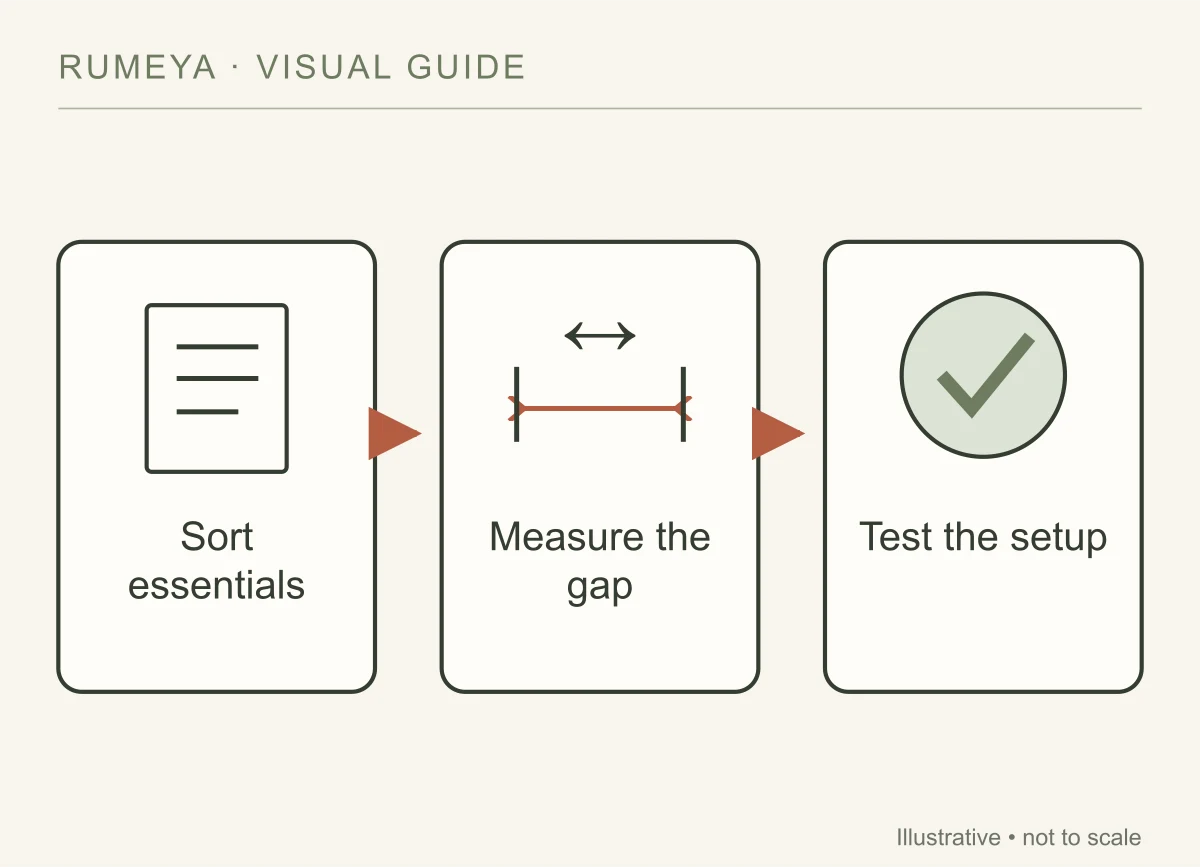
- Keep only the items you use at bedtime or overnight.
- Measure the gap, bed height, and any space needed below the frame.
- Test reach without leaning awkwardly or blocking your way out.
- Check mounting requirements, stability, and load limits.
- Place drinks on a stable surface and keep cords out of the walking route.
Common questions
What is the easiest option for a rental?
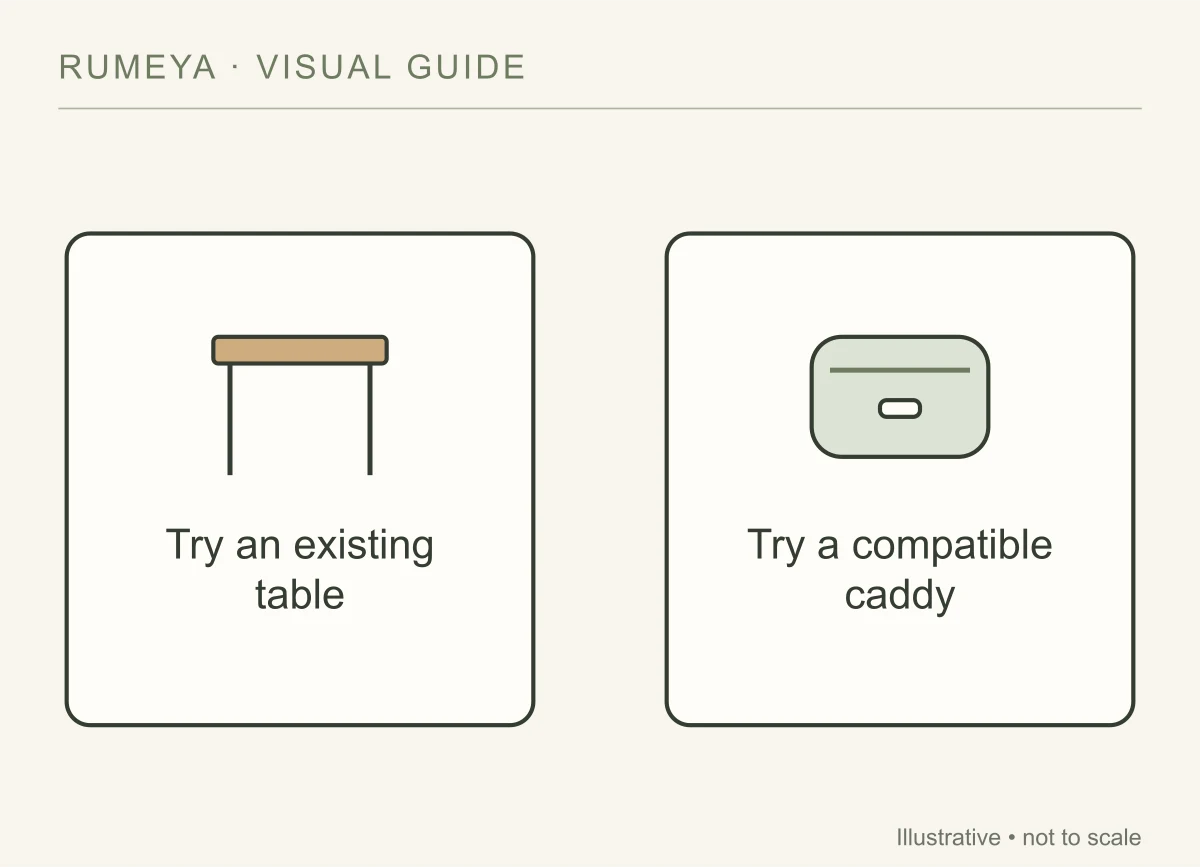
An existing slim table or stable stool is a good first trial because you can move it immediately. A compatible bedside caddy is another possibility when you mainly need a place for small, dry items.
Do both sides of the bed need to match?
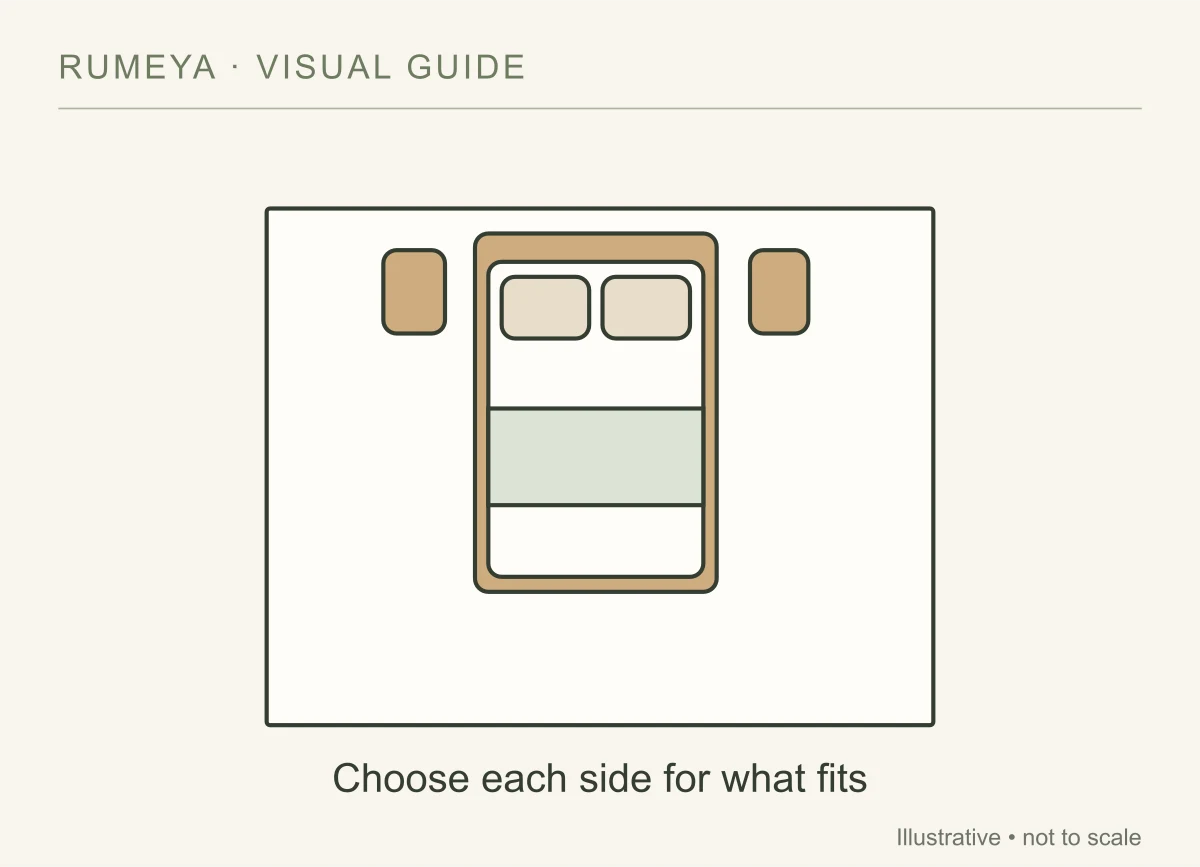
No. Choose each side around the person who uses it and the available space. Keeping one shared detail, such as a similar wood tone or lamp finish, can make different pieces feel intentional without forcing the same size on both sides.
Sources and further reading